
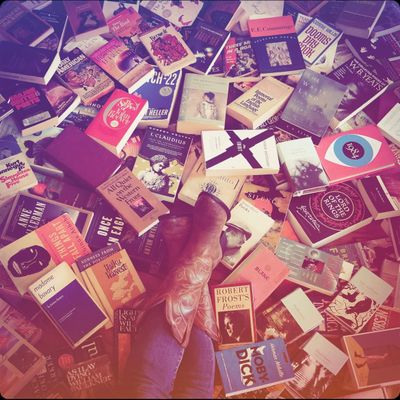
A few years ago I wrote a post titled The Art of Slow Reading.
In that post there is a section called "Get a physical copy of the book" where I suggest that using an e-reader does not give you the full experience of the art of slow reading.
I have since changed my mind.
Yes, I still think there is a unique and special quietness that descends when you are reading a physical book.
And yes, I still believe the journey is more visceral in the sense that a physical book has a unique and sheer physicality to it.
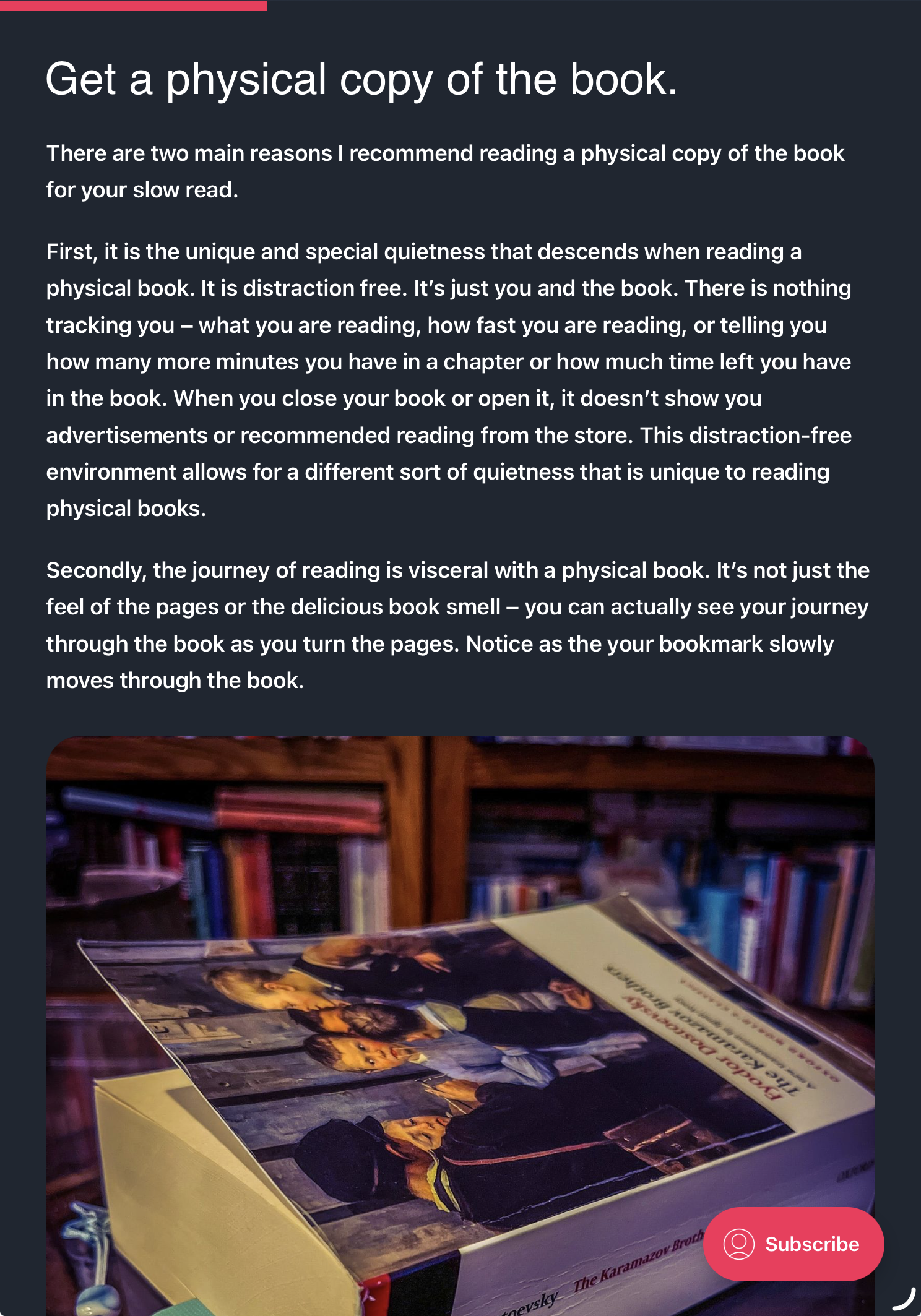
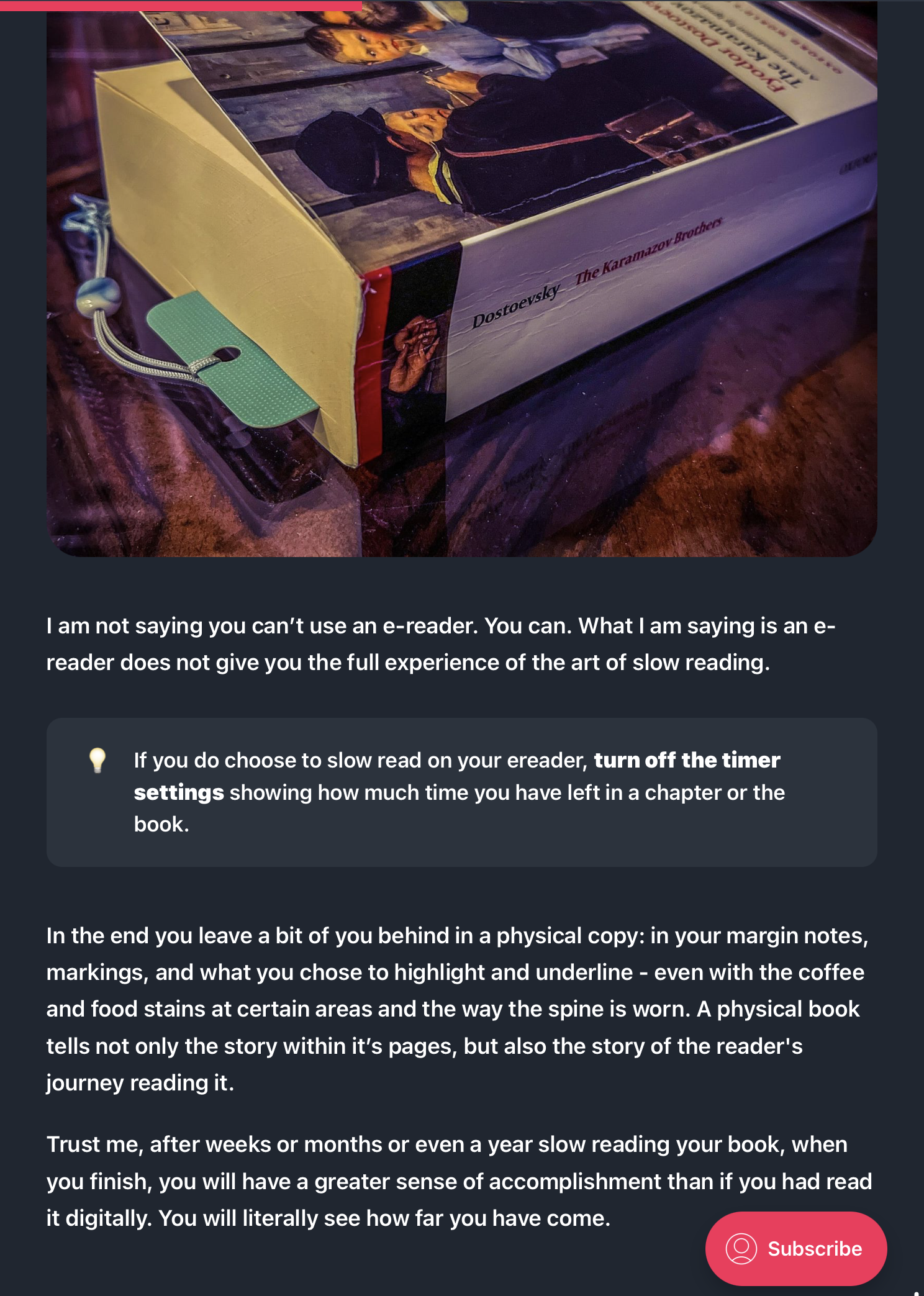
Images of that section from the original post.
And again, yes, I still think you do leave a bit of yourself behind in a physical copy with your handwriting, marginalia, and the changes to the book itself as you carry with you and read it.
These wonderful things about slow reading a physical book add to the experience of slow reading but these things are not what makes it a "full" experience.
Slow reading on an e-reader.
Since writing that post in January of 2024 I have struggled with Dante's Divine Comedy on my Kindle, Moby Dick, spent many, many months reading Don Quixote by Cervantes, and this year, read one of my now favorite novels of all time: Susanna Clarke's Jonathan Strange and Mr. Norrell.
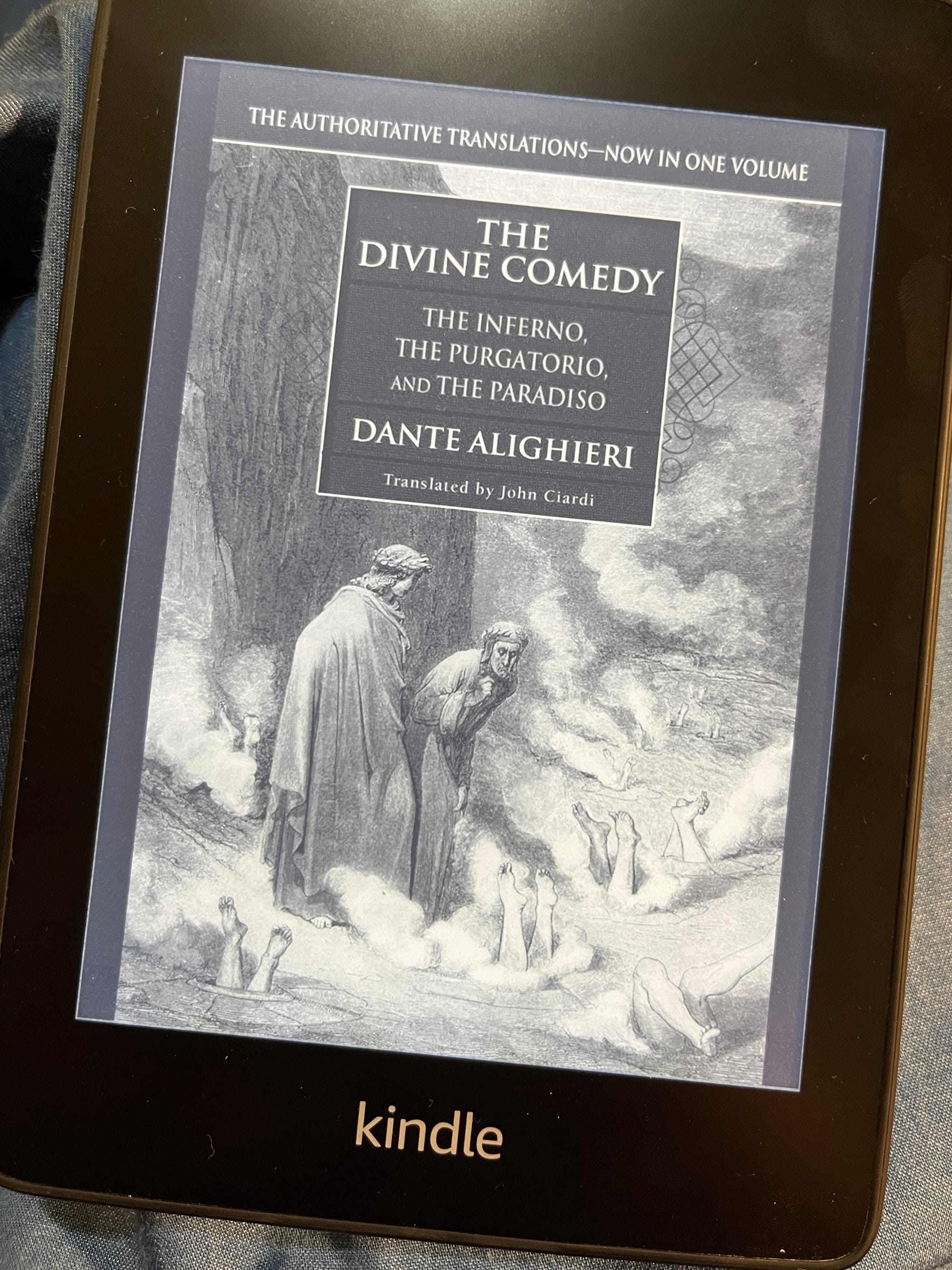
Slow reading on my Kindle really started with Dante’s Divine Comedy while doing my Epic, Epic, Poetry Project . It was so hard to get the feel of what I was reading because I constantly had to flip to the back (interrupting my flow) to read notes as well as find out who these historical figures were from Dante’s time.
Finally, I broke down and got a kindle version. It was so much easier and seamless. Dante is already a struggle. But it took away some of that friction and I was only left with the good struggle.
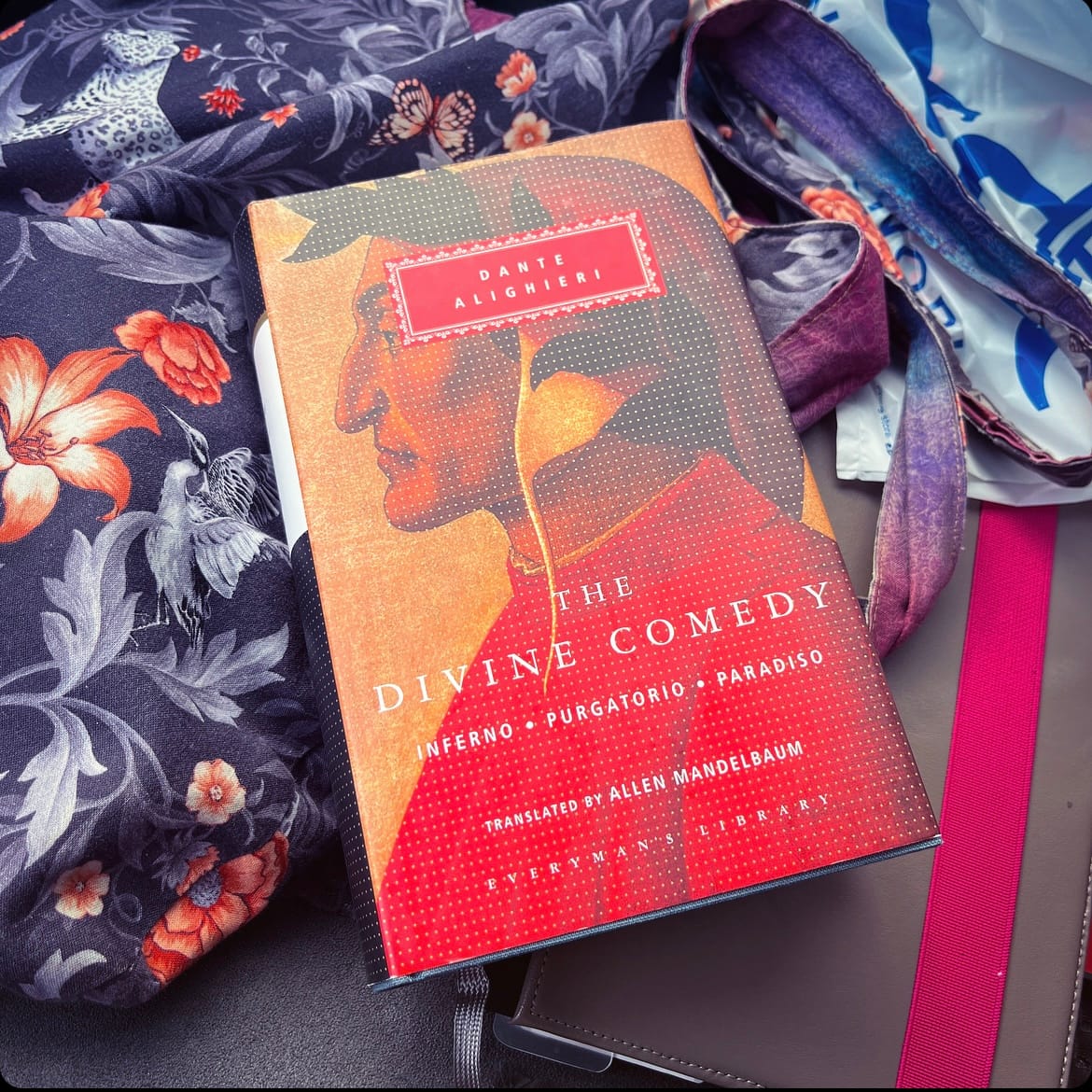
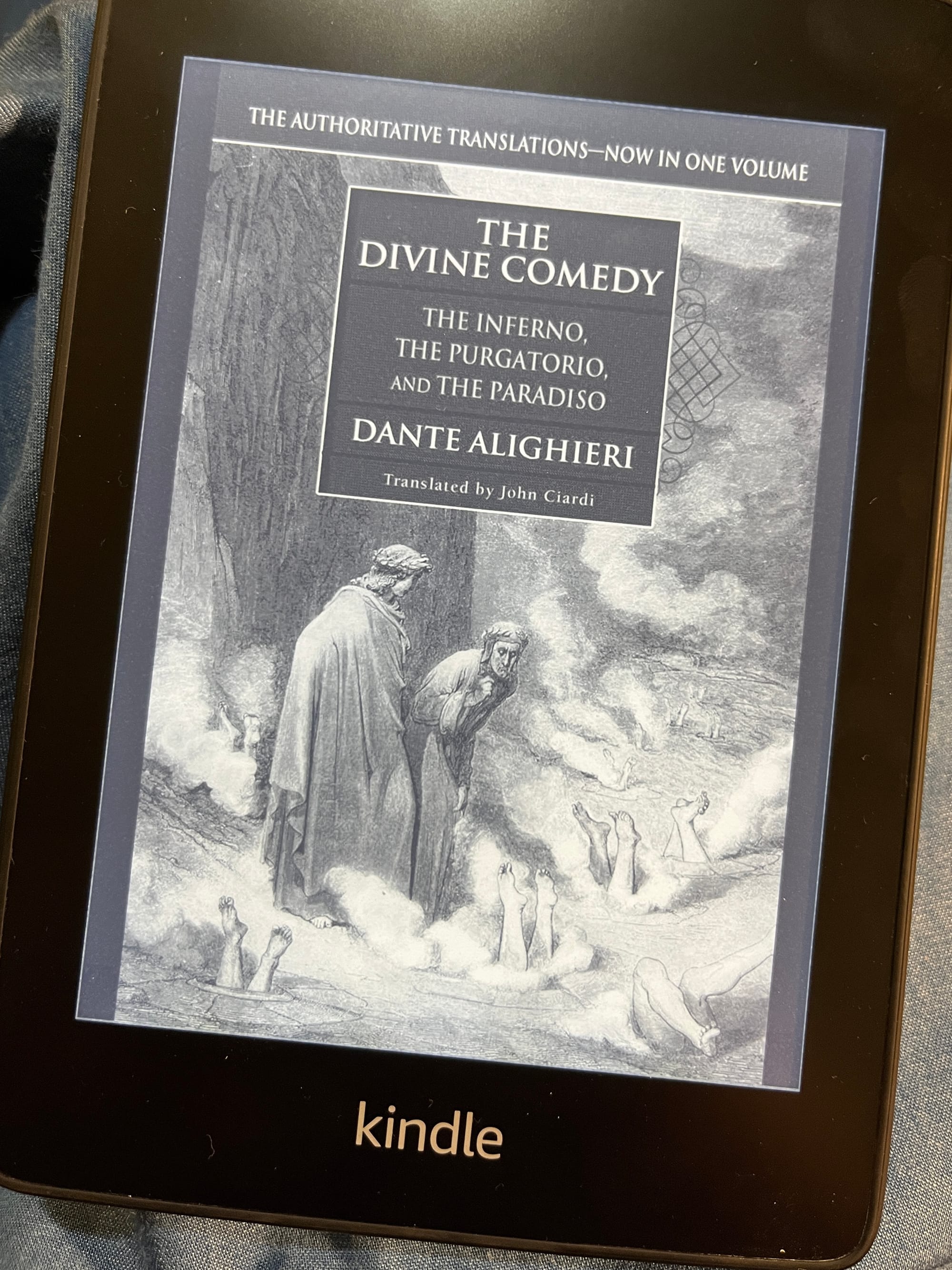
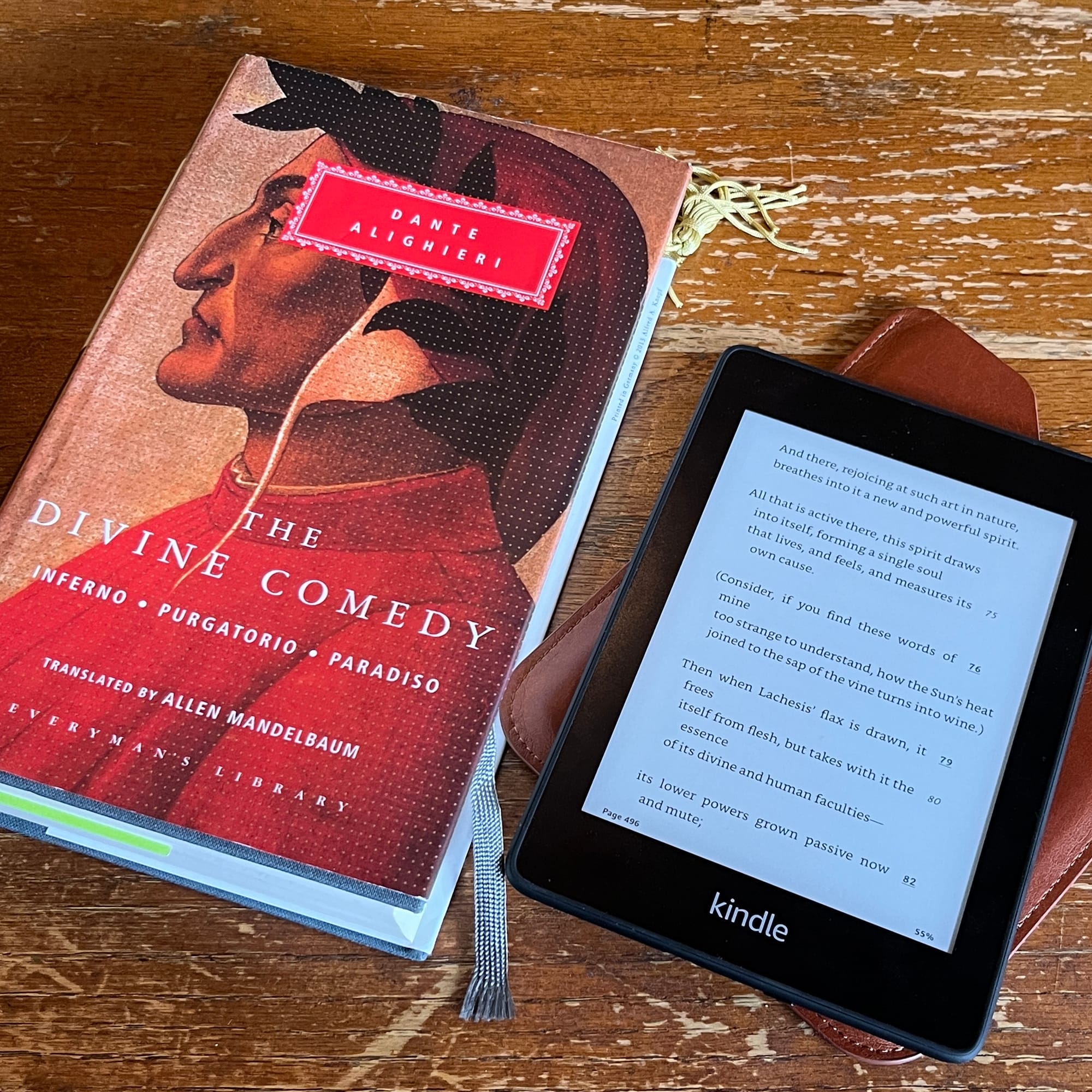
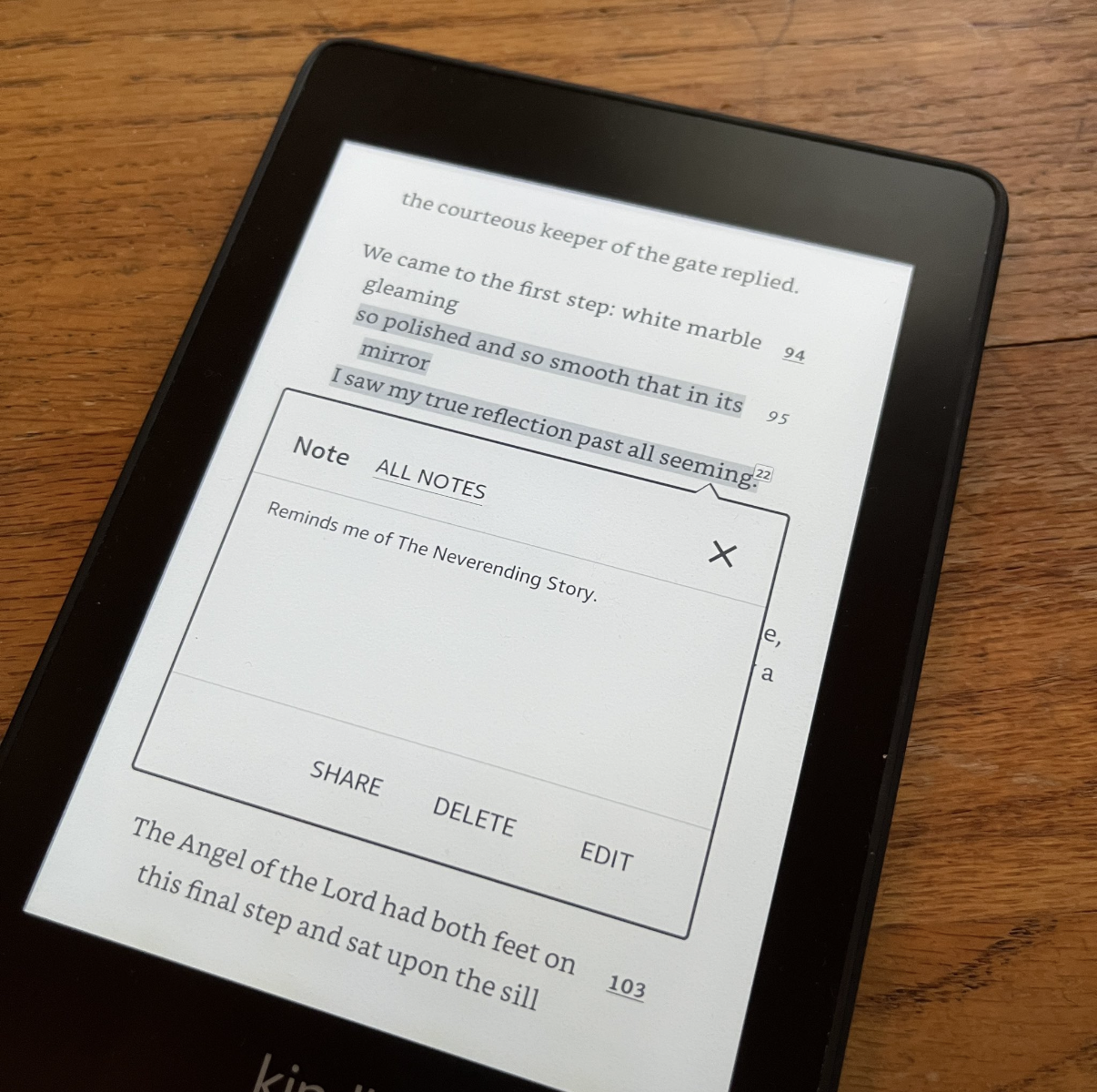
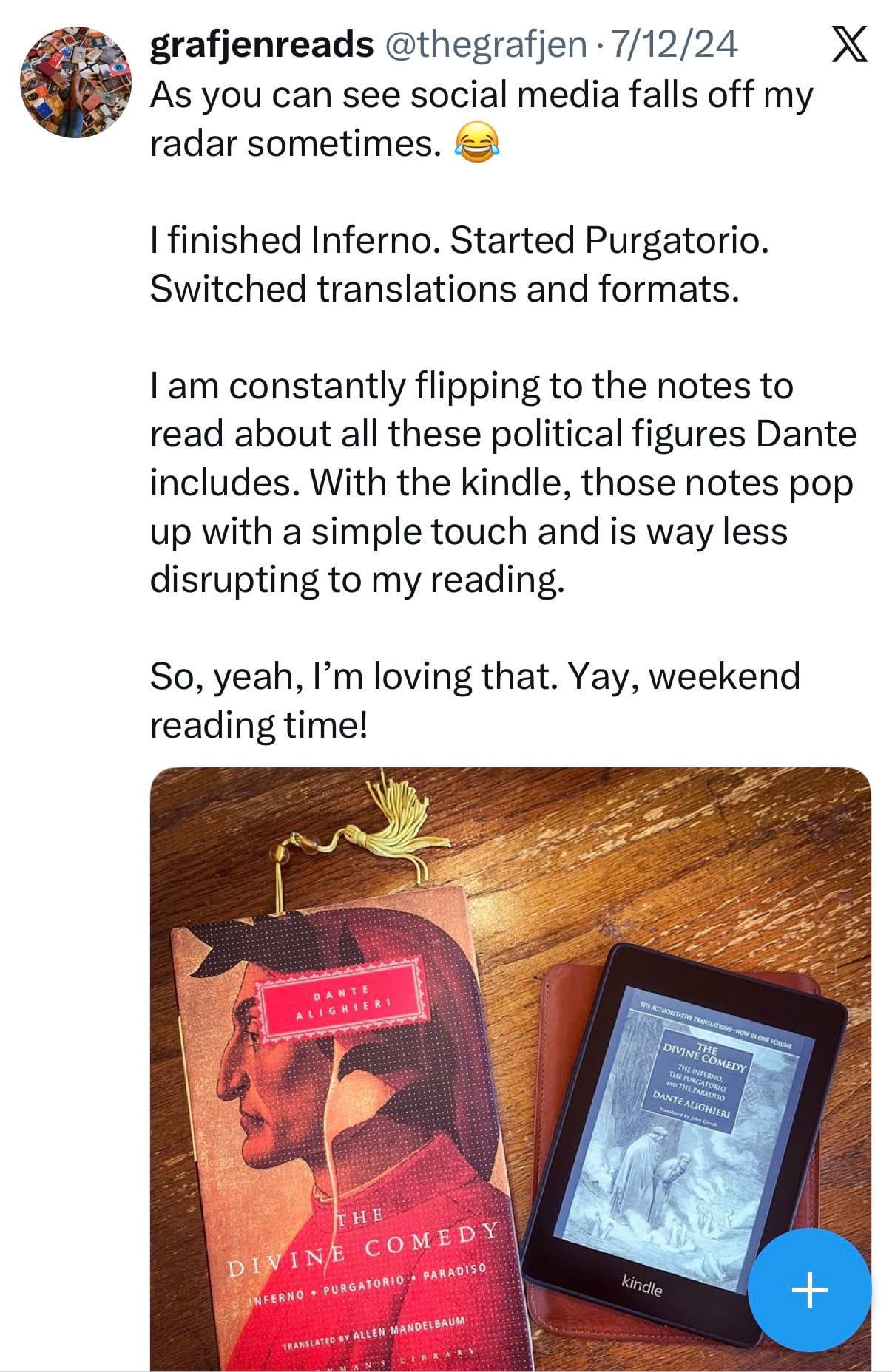
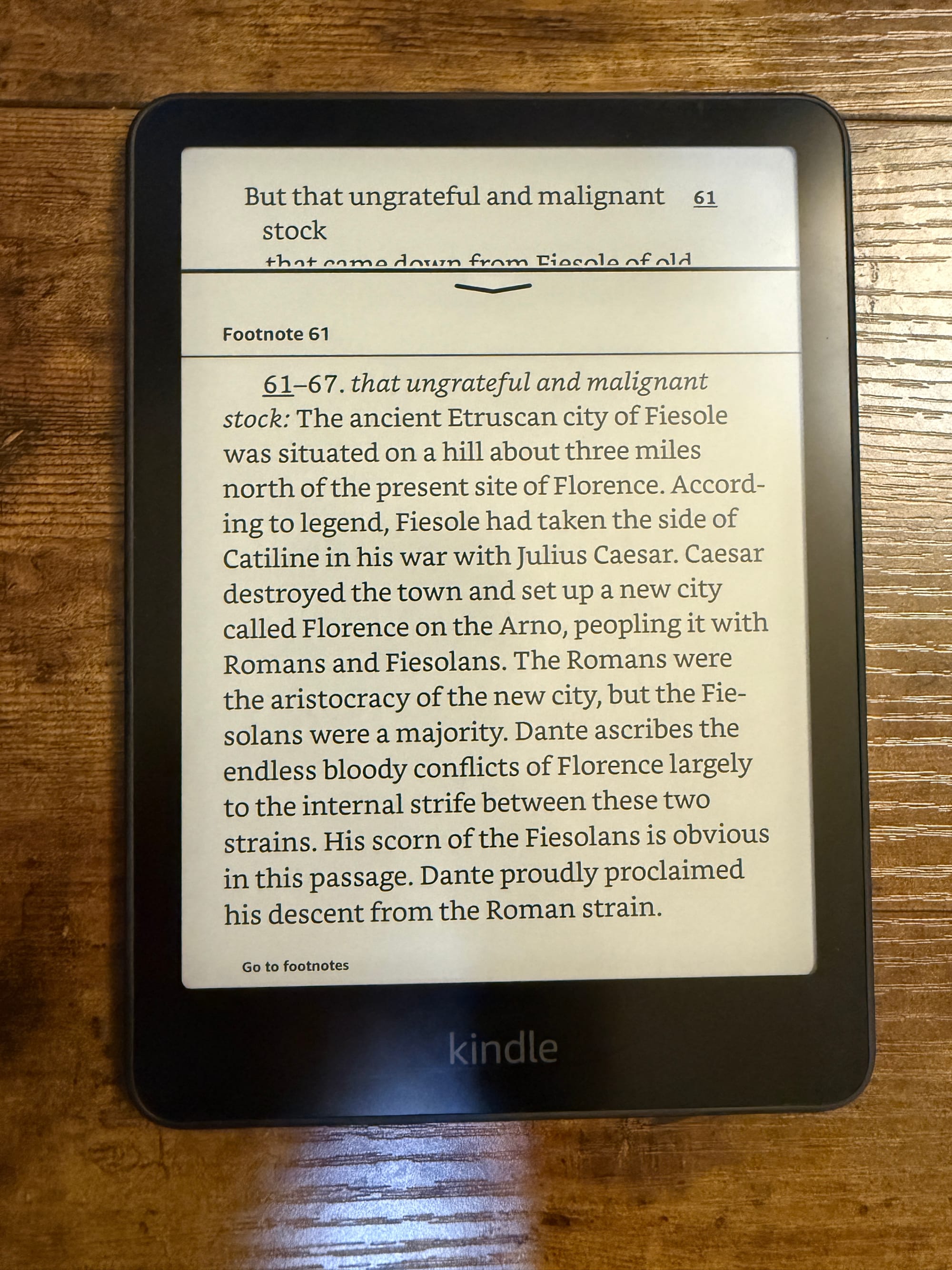
I still love my Everyman's Library edition of The Divine Comedy. But Ciardi's Kindle version was awesome. These images show my journey between the two.
By the time I got to Moby-Dick, I was primed for slow reading on my Kindle. Starting with a paperback I'd picked up years ago, I quickly switched to the Kindle. This time I got the Norton Critical Edition, which had tons of great information accessible with a single touch rather than having to search online. Later, I found a cute copy at an independent bookstore and ended up reading back and forth between the two.
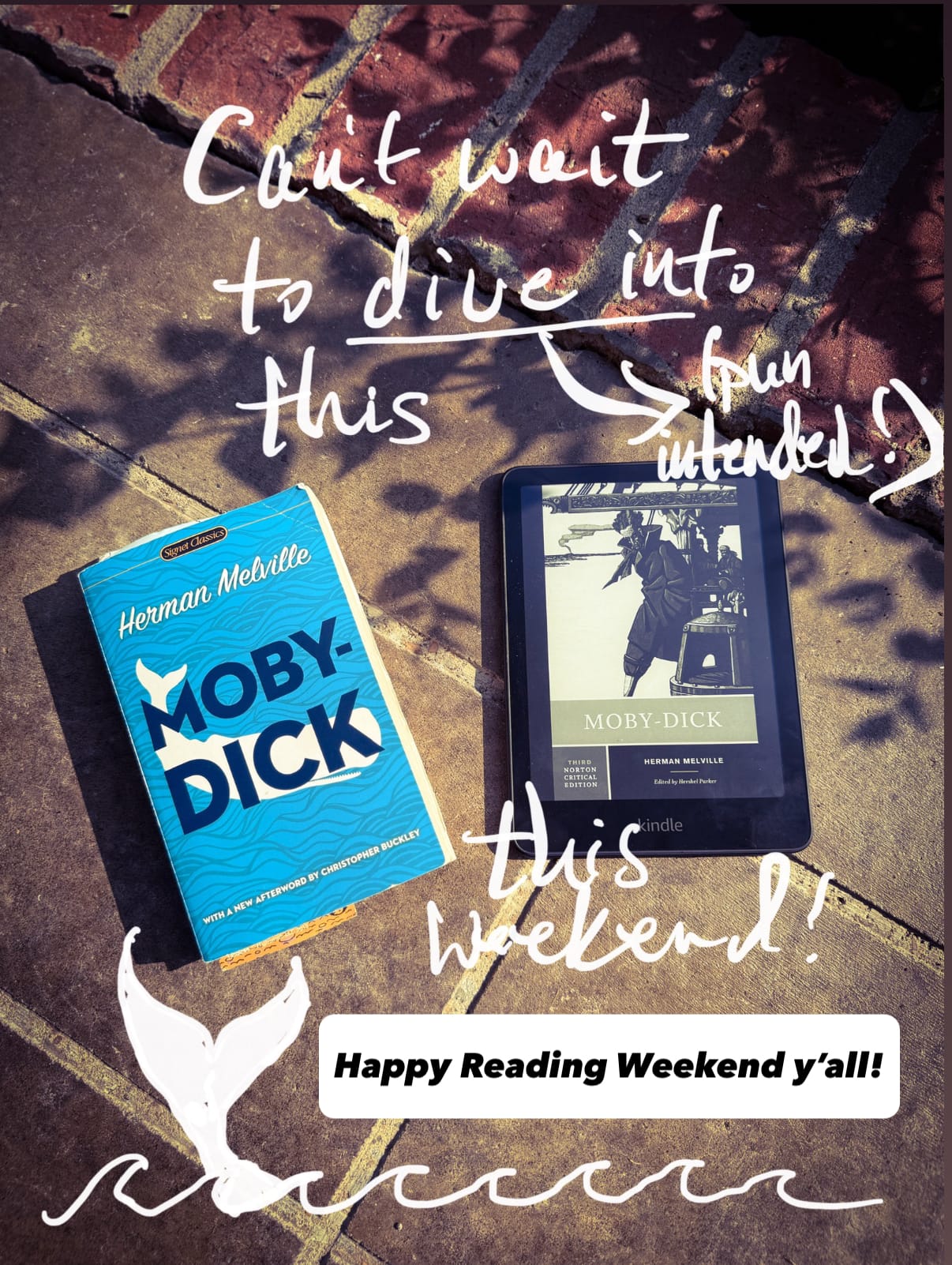
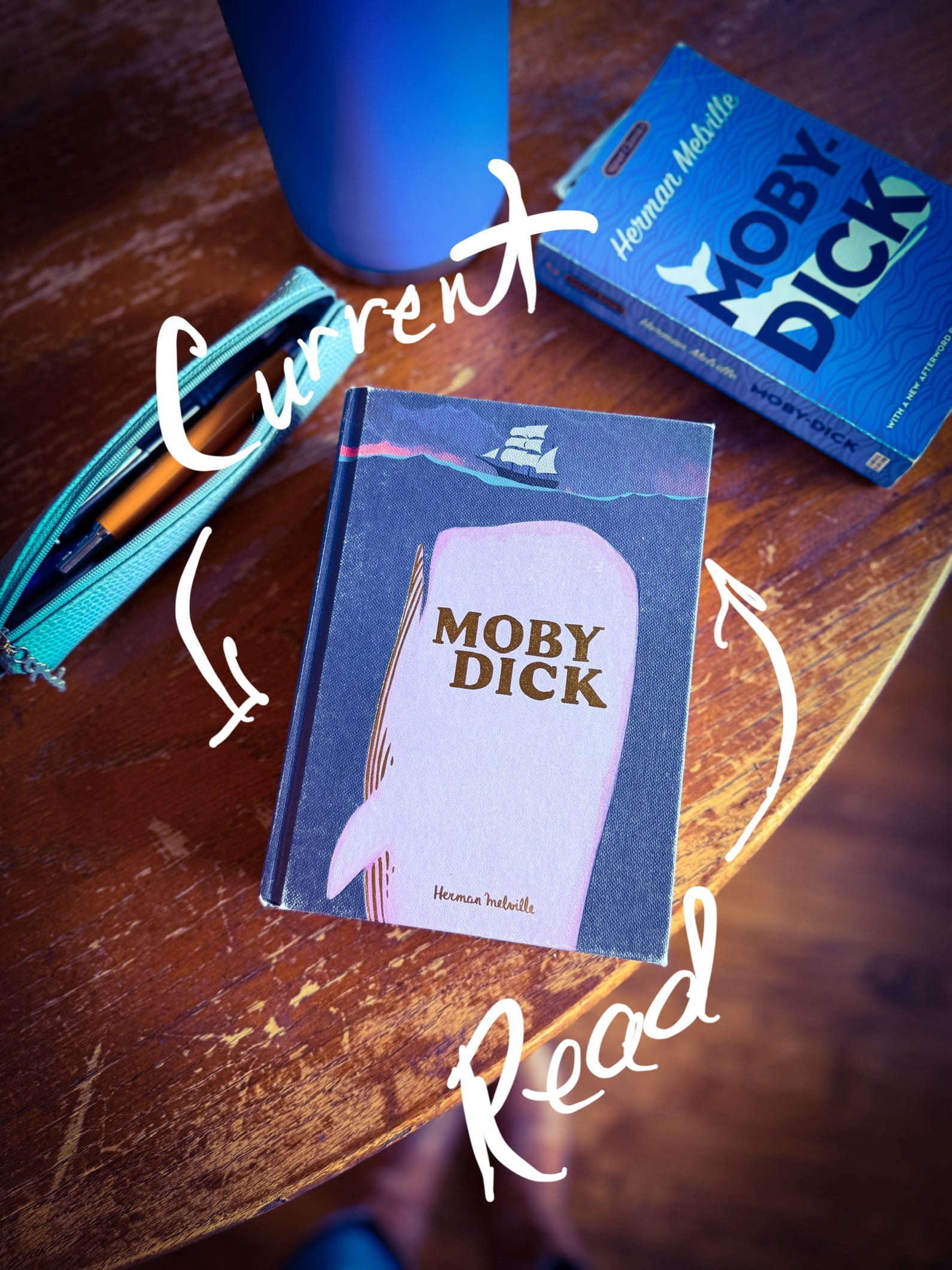
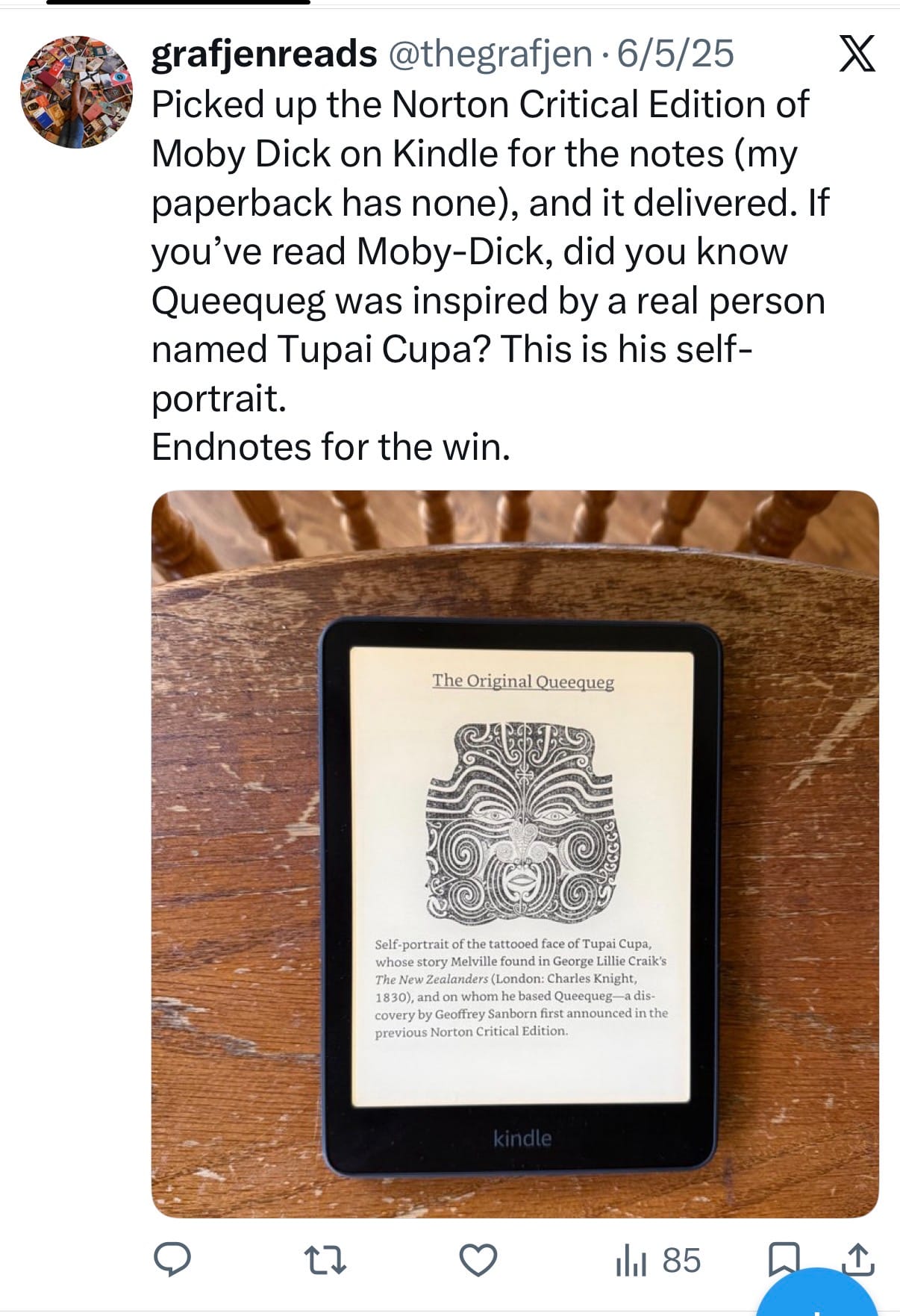
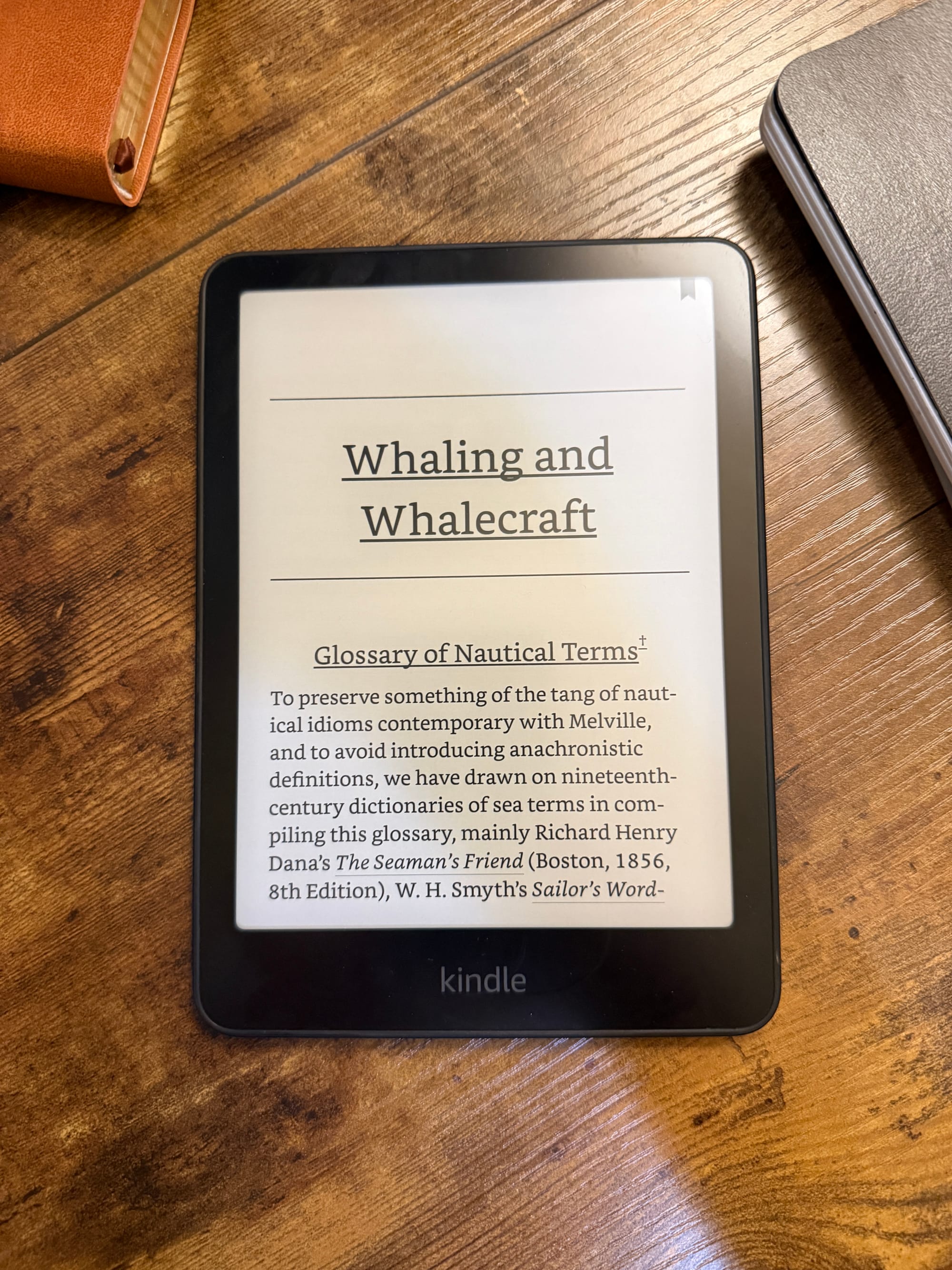
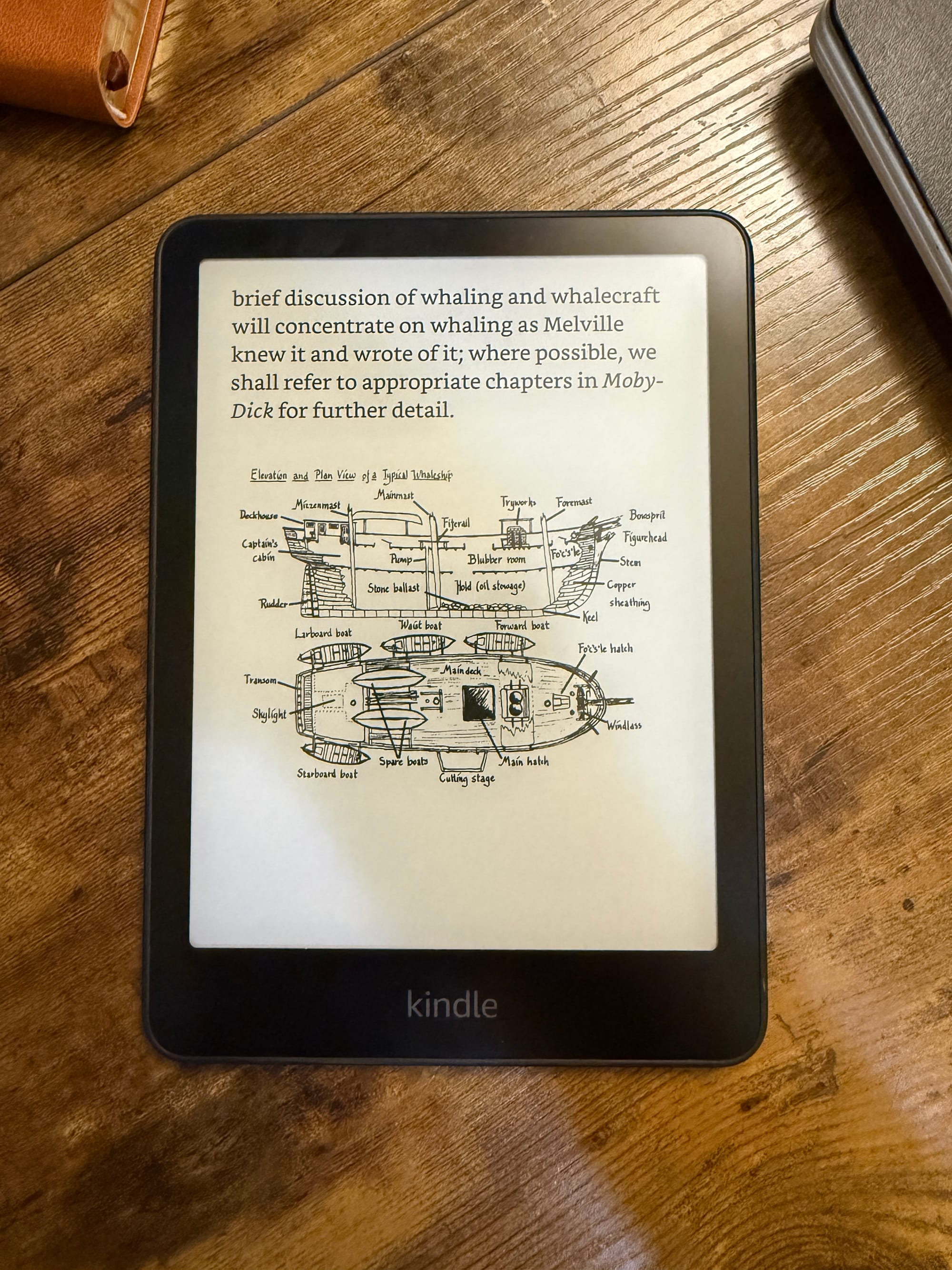
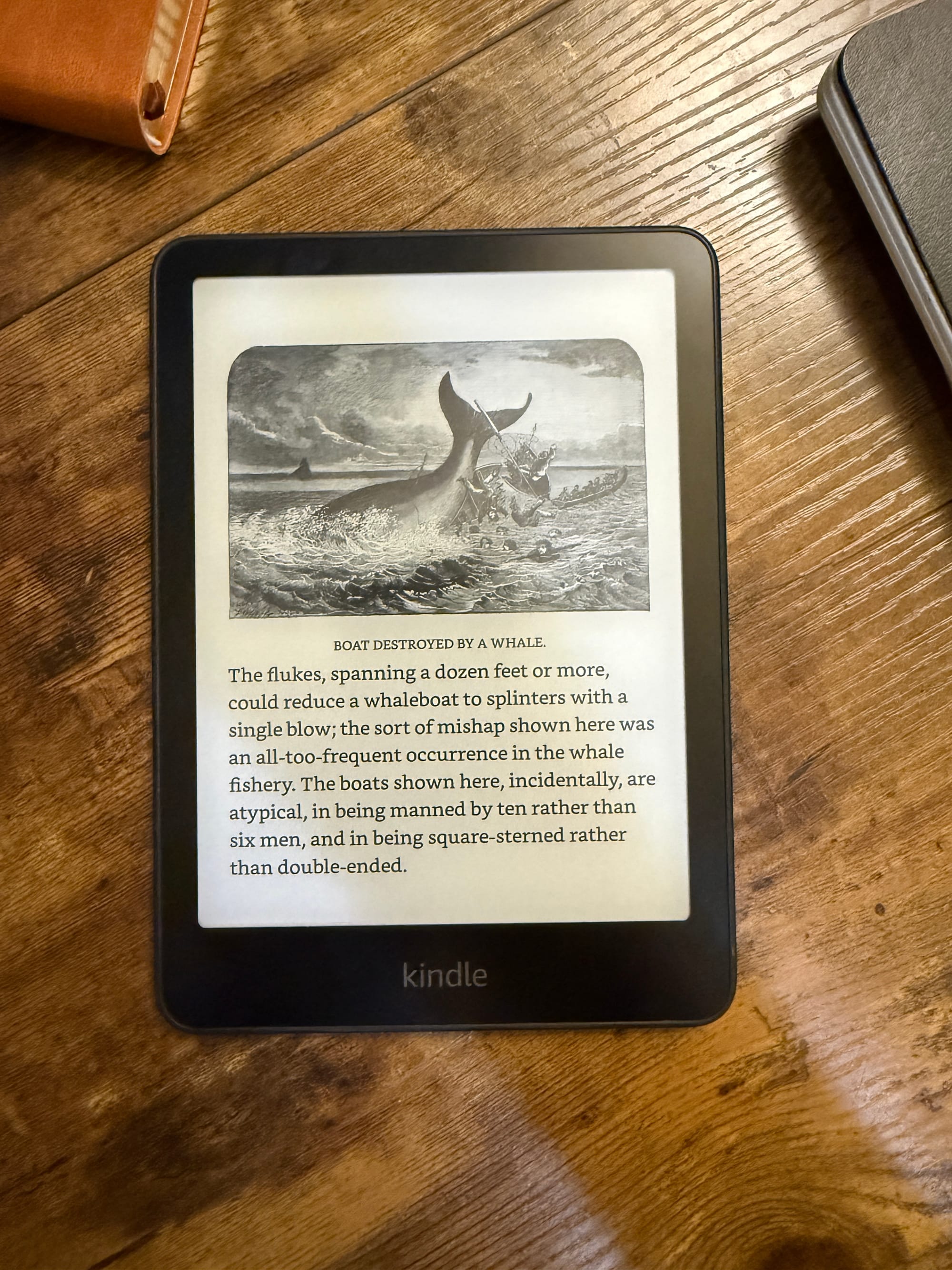
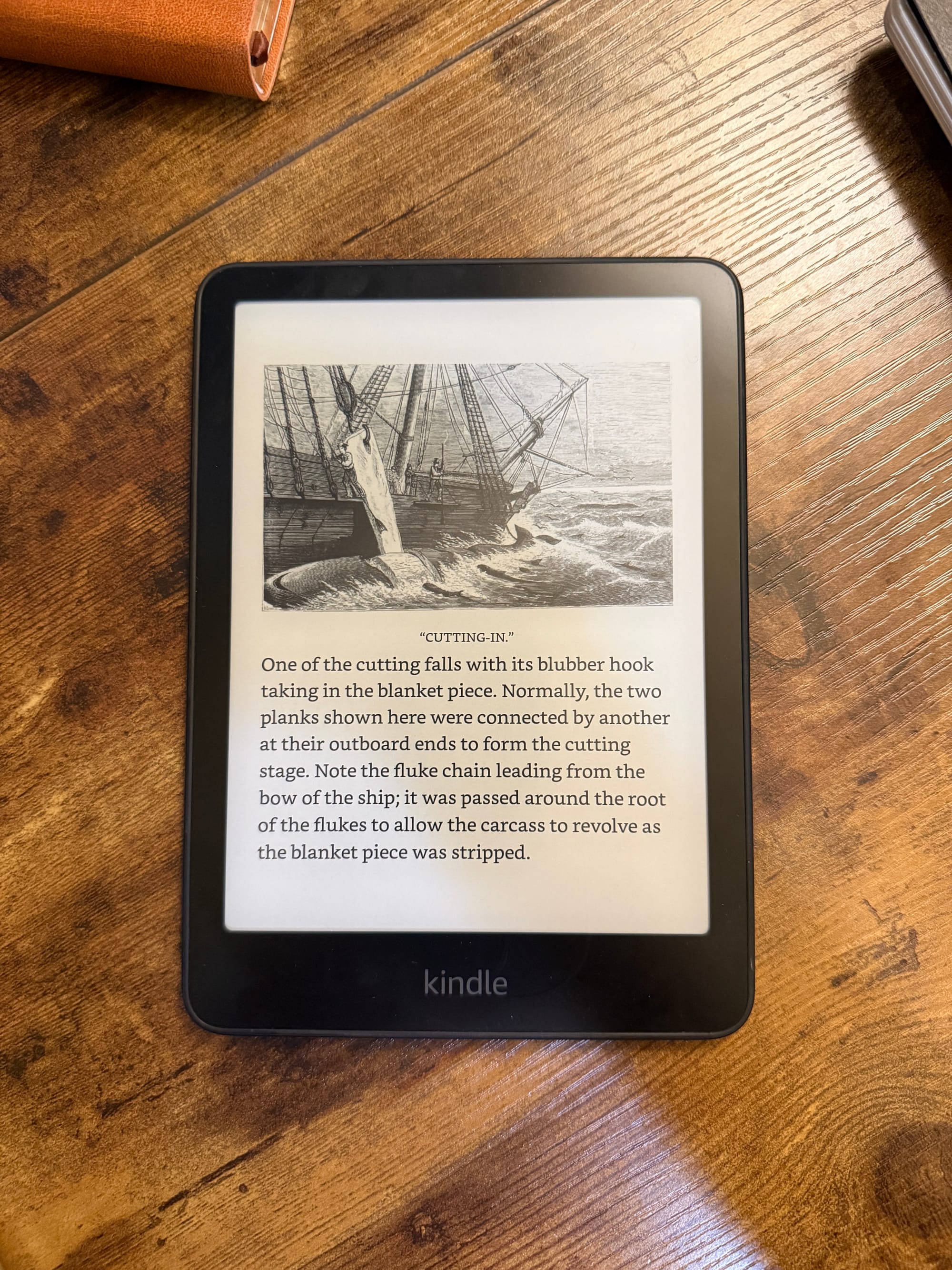
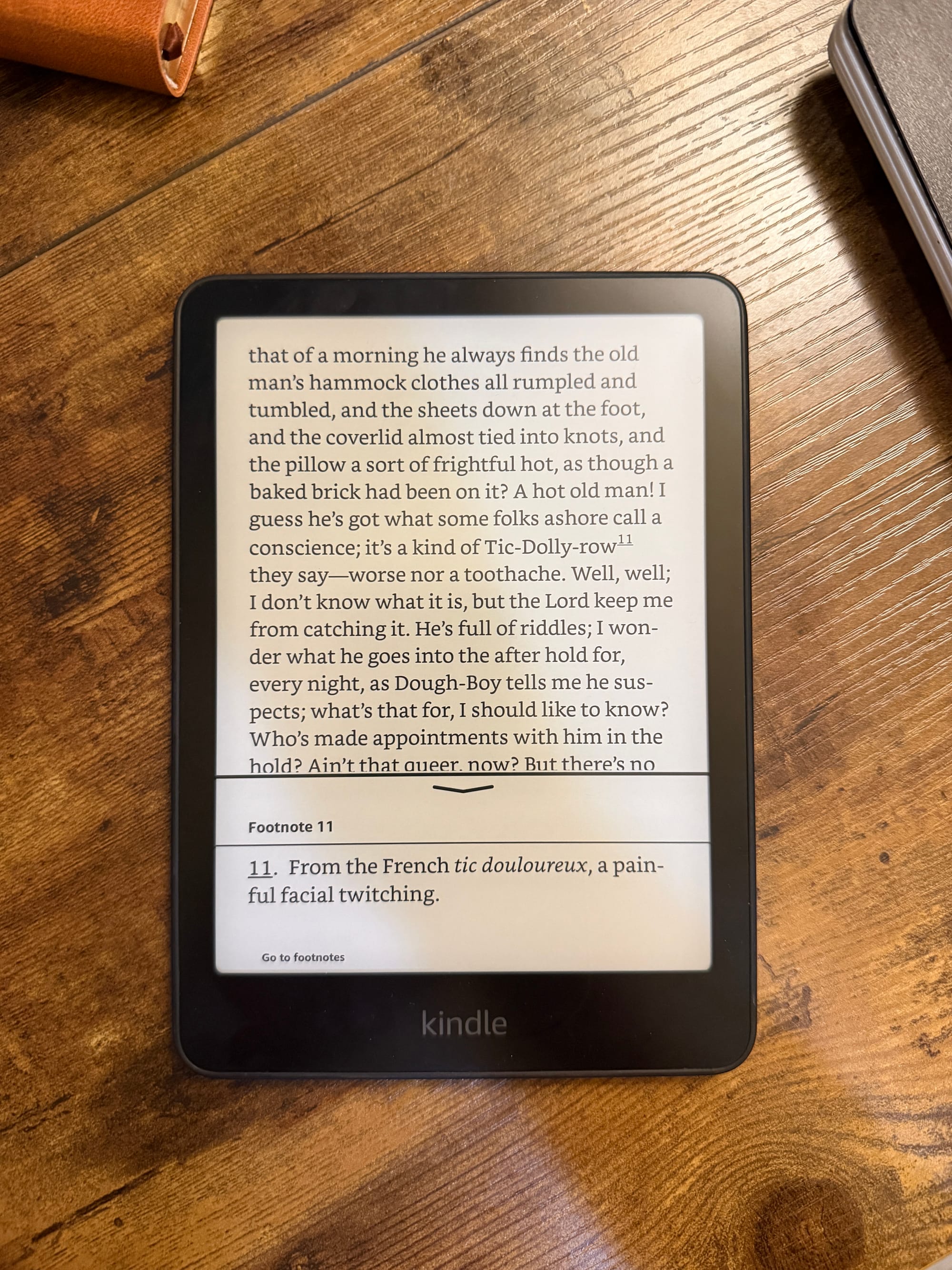
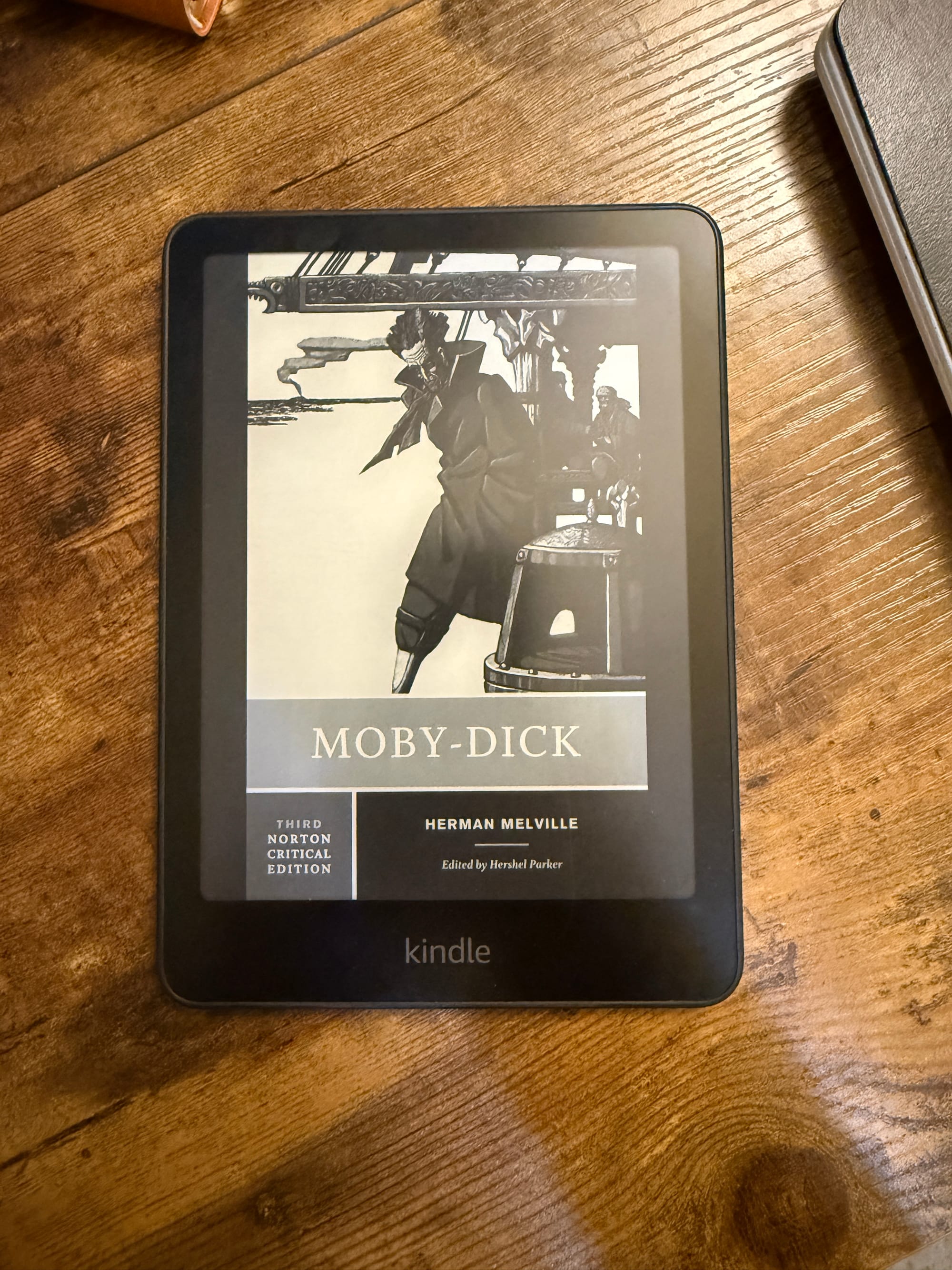
Images from my social media on Moby Dick as well as showing that the extras are just as wonderful in the kindle version. Loved this Norton Critical Edition on Kindle!
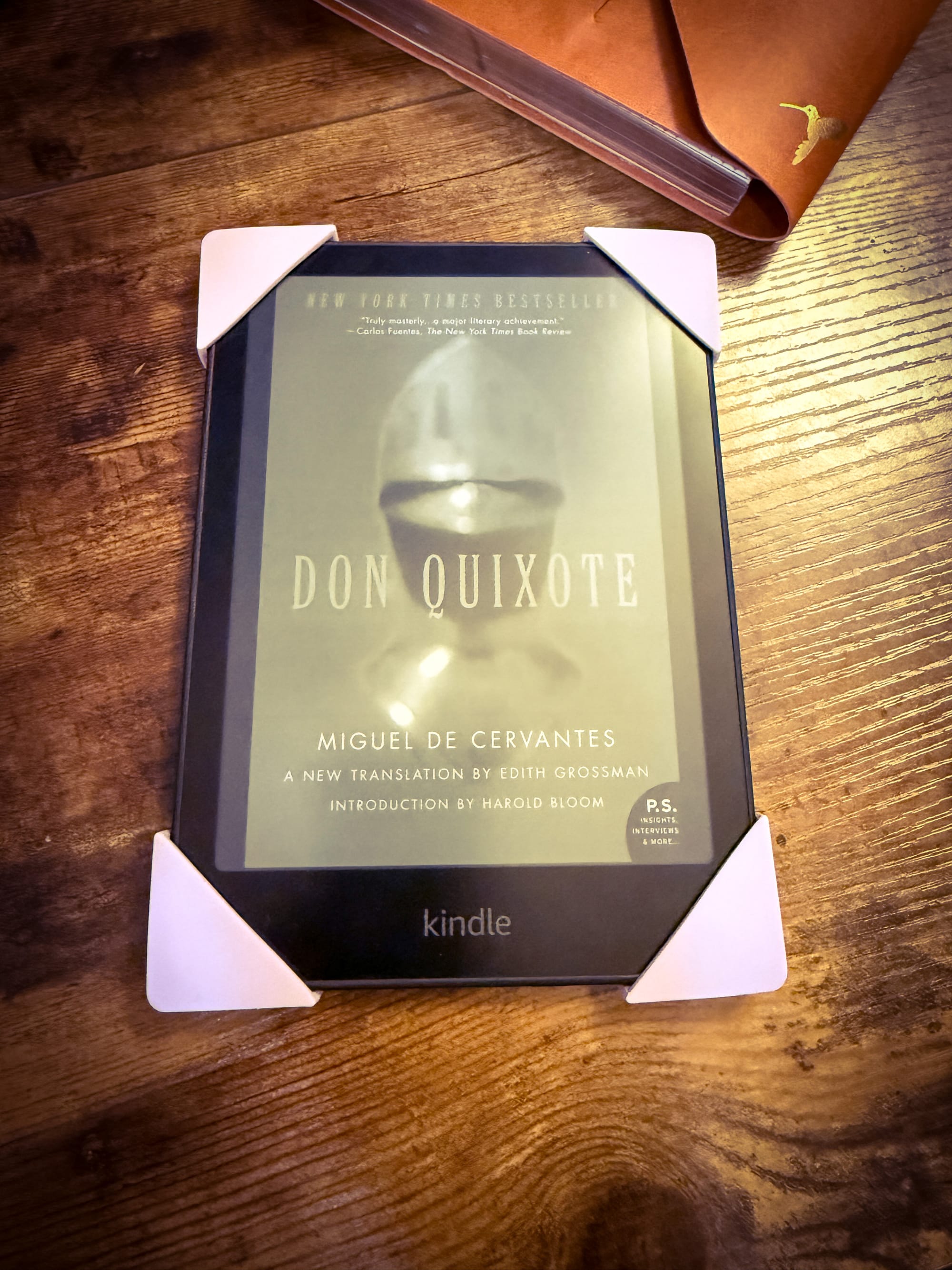
Don Quixote took a long time to read. I started with the book I'd been gifted but ended up switching to my Kindle after grabbing the digital version during a one-day sale for $1.99. The print in the paperback was so tiny, and with the Kindle I could resize the text, plus it was also easier to hold during long reading sessions.
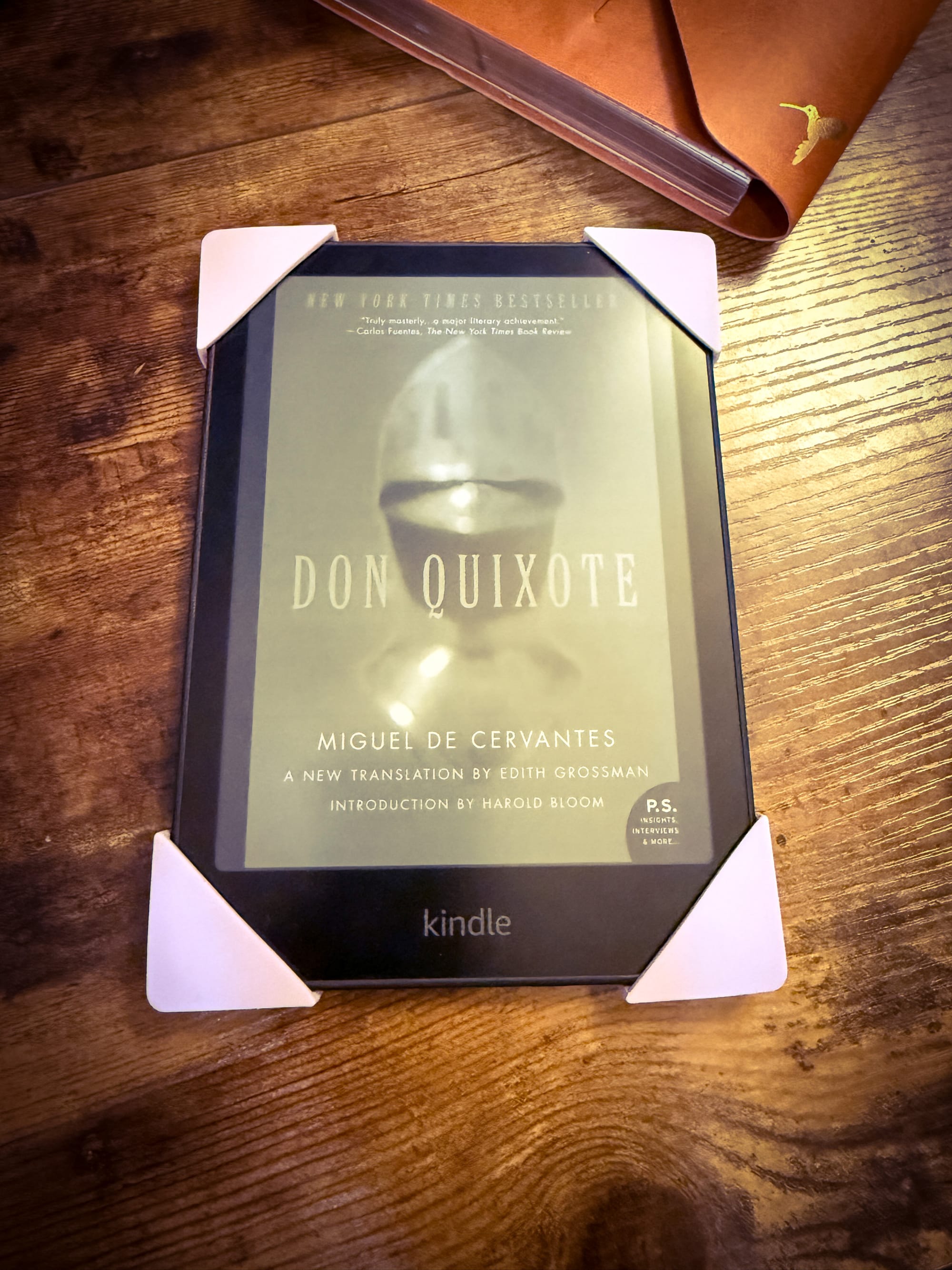
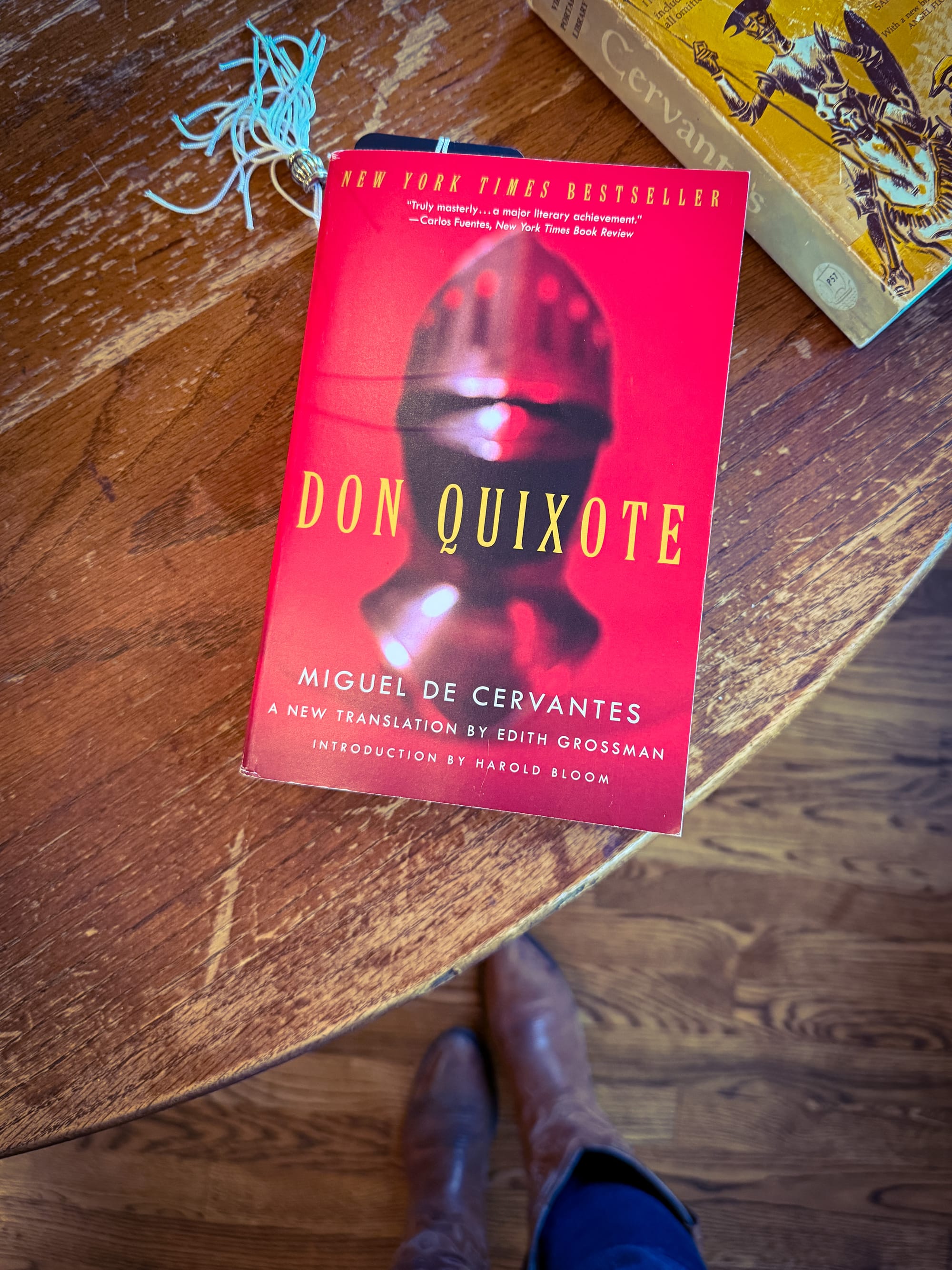
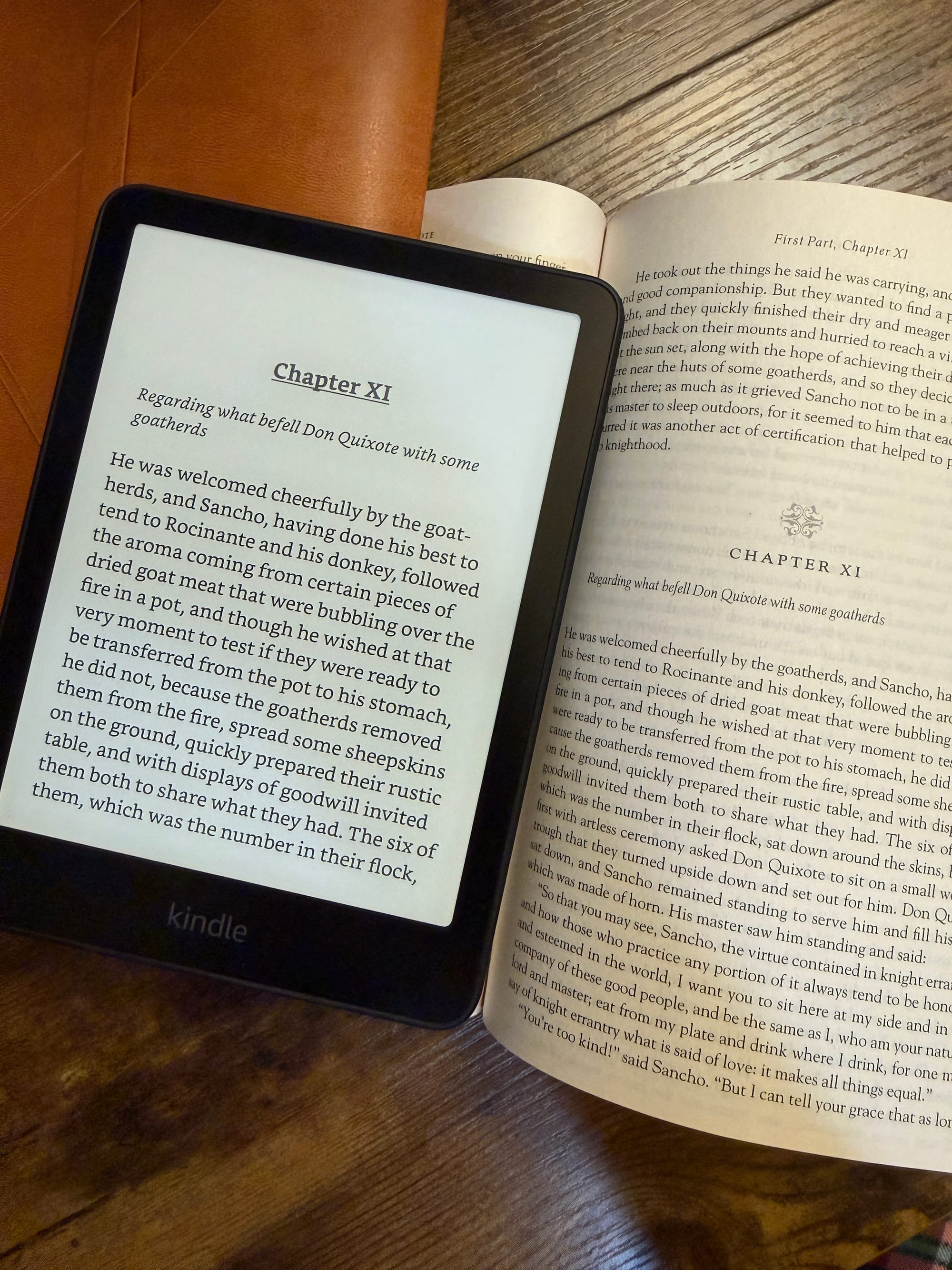
It is a huge book. I went back and forth for a while but for most of the last half of the book I read the Kindle version.
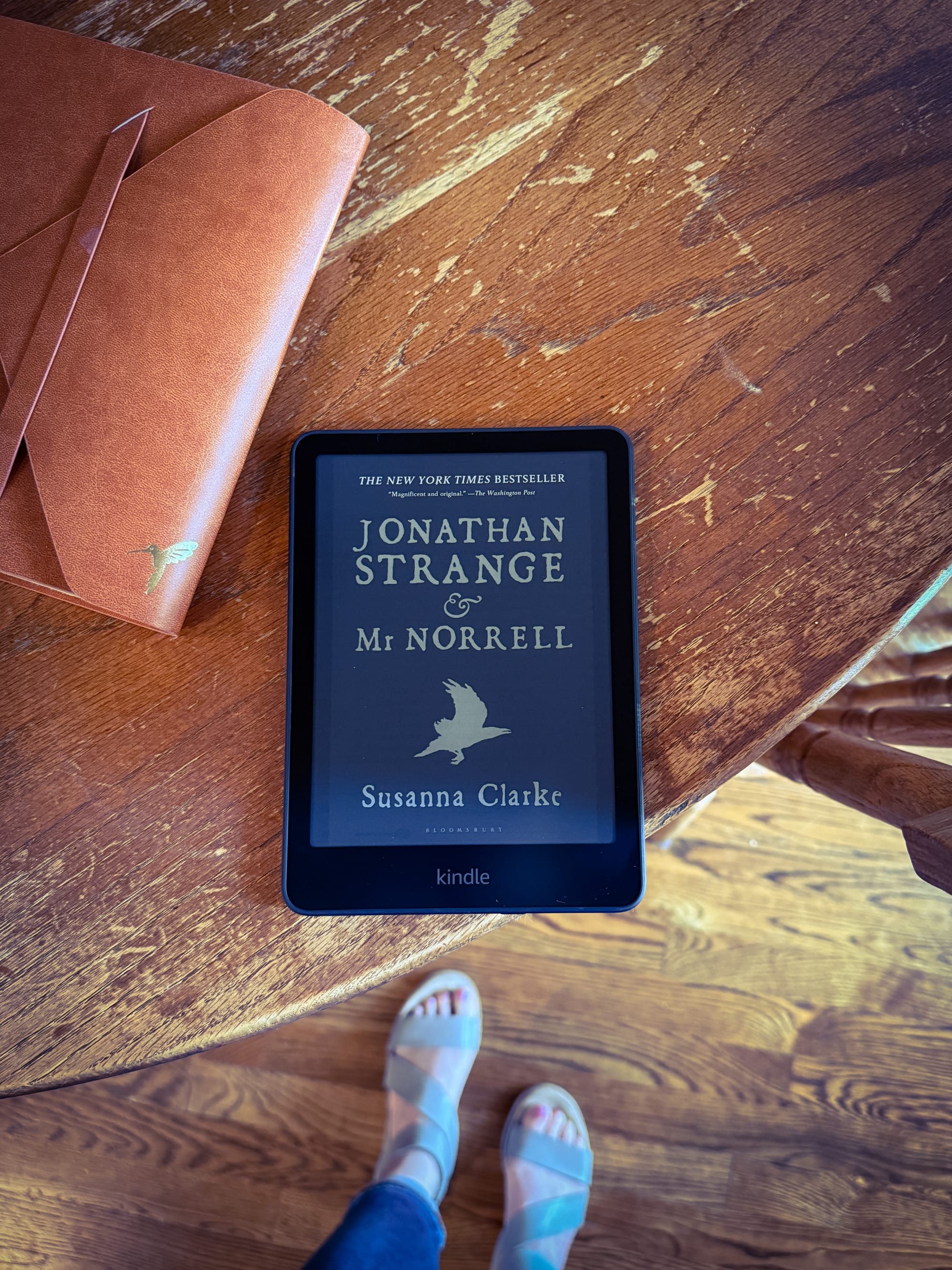
Jonathan Strange & Mr Norrell was the first slow read I did entirely on my Kindle, without switching back and forth between formats. (And yes, I grabbed this one during a one-day sale for $1.99, too.) I cannot tell you how much I loved this novel. I couldn't read anything else for an entire week after finishing it. I do love that the Kindle edition includes all the illustrations.
I've never been a "book trophy" kind of person. Physical books are meant for reading, not just sitting pretty on a shelf. But I loved this novel so much that I wanted a physical copy to have and to hold. If I read it again, and I just might, I'll read the physical copy.
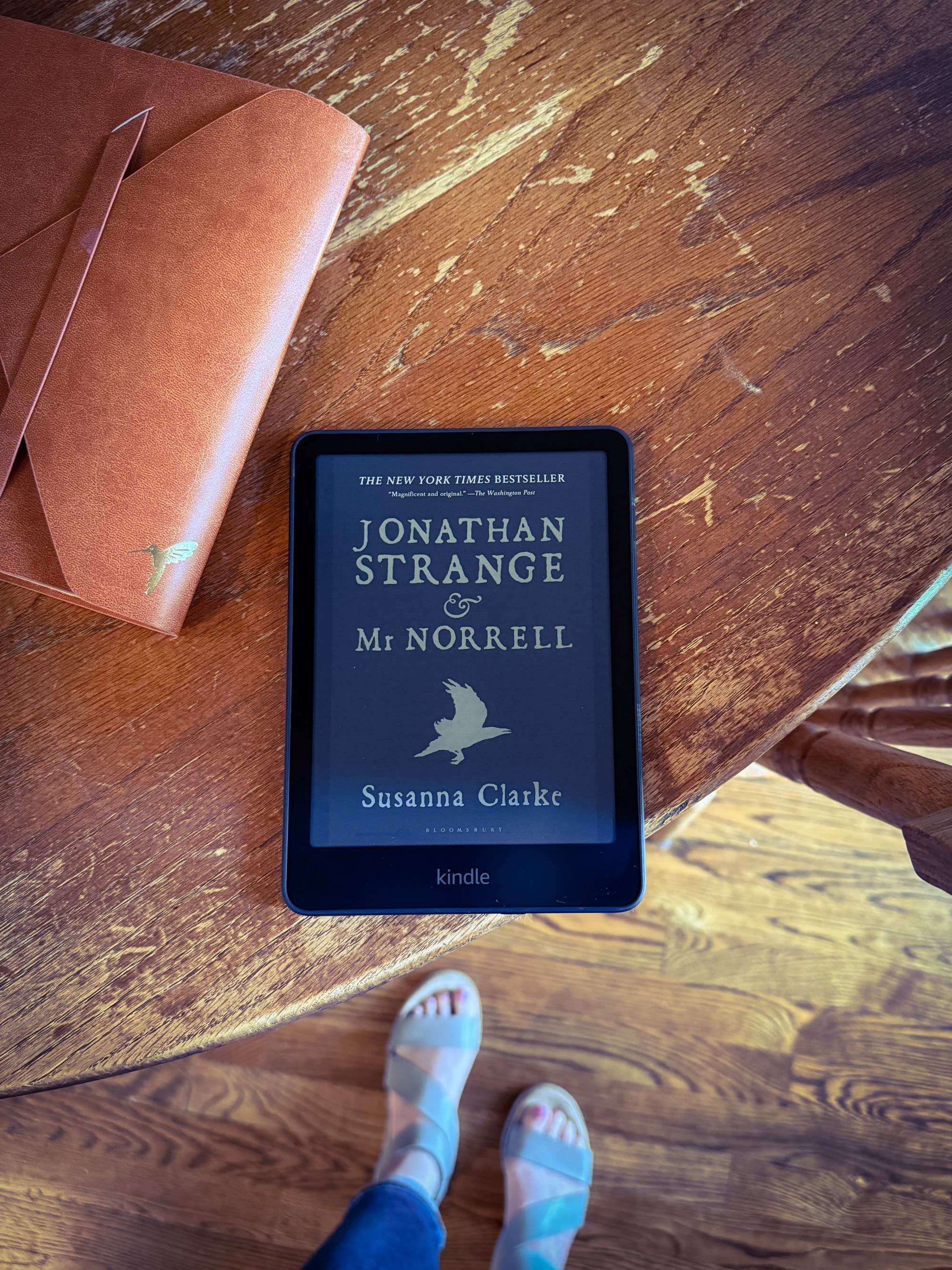
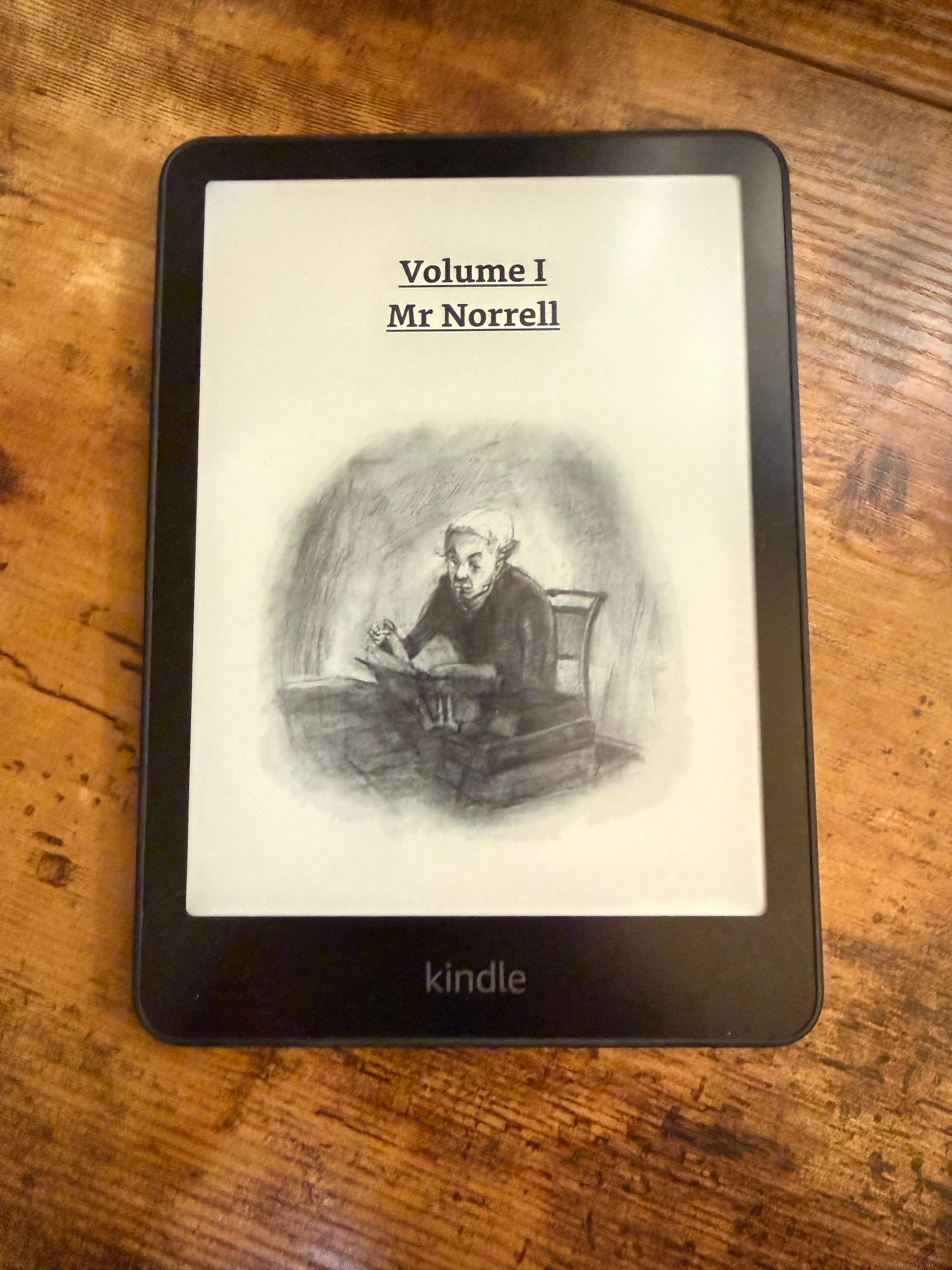
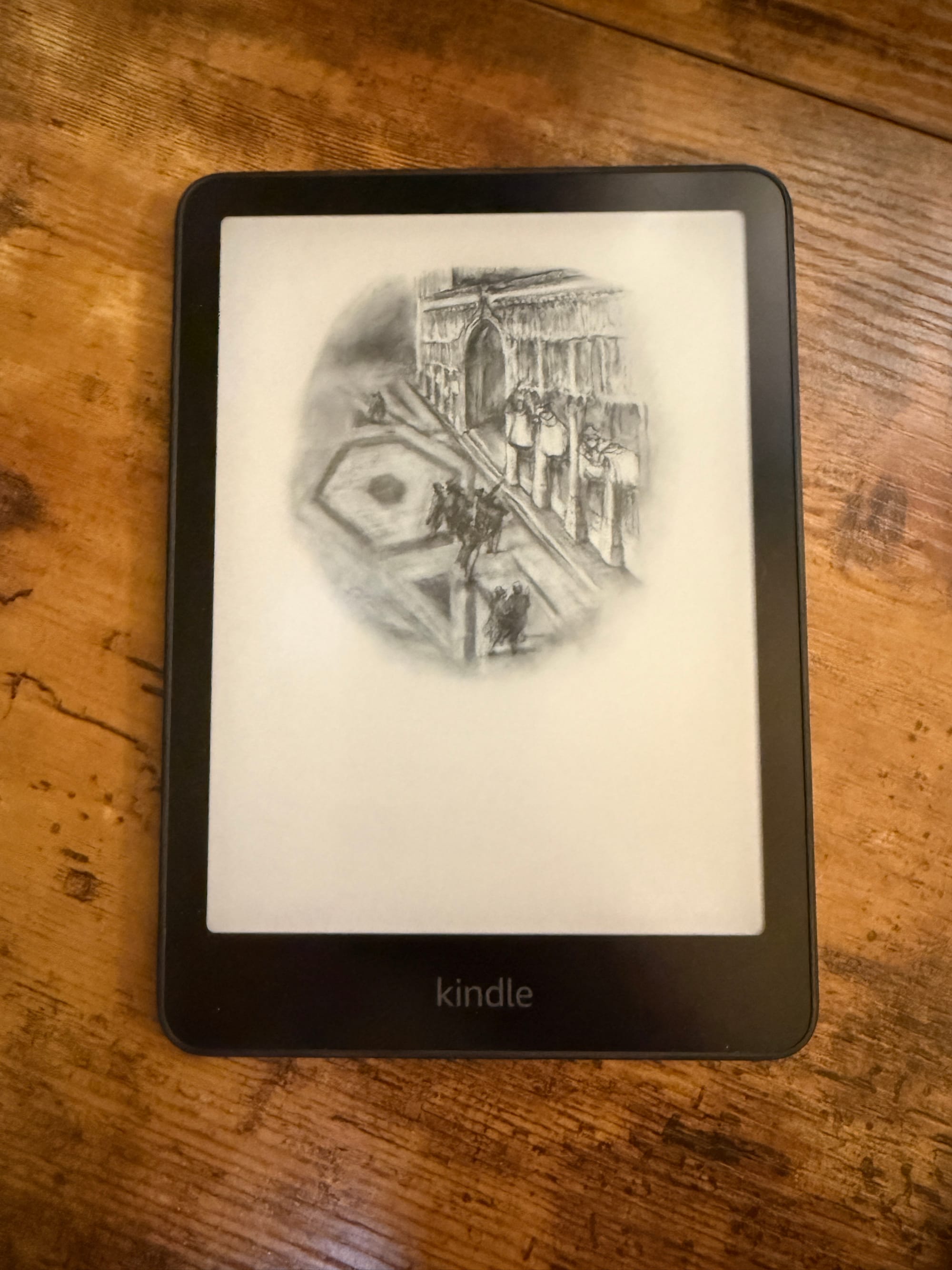
I read this entirely on my Kindle. I love that the illustrations are also in the Kindle version.
Currently, at the time of writing this, I am embarking on reading Les Misérables by Victor Hugo. I started this one a while back in a very old copy of the book I picked up at the used bookstore and stopped. Then I got another version again at the used bookstore.
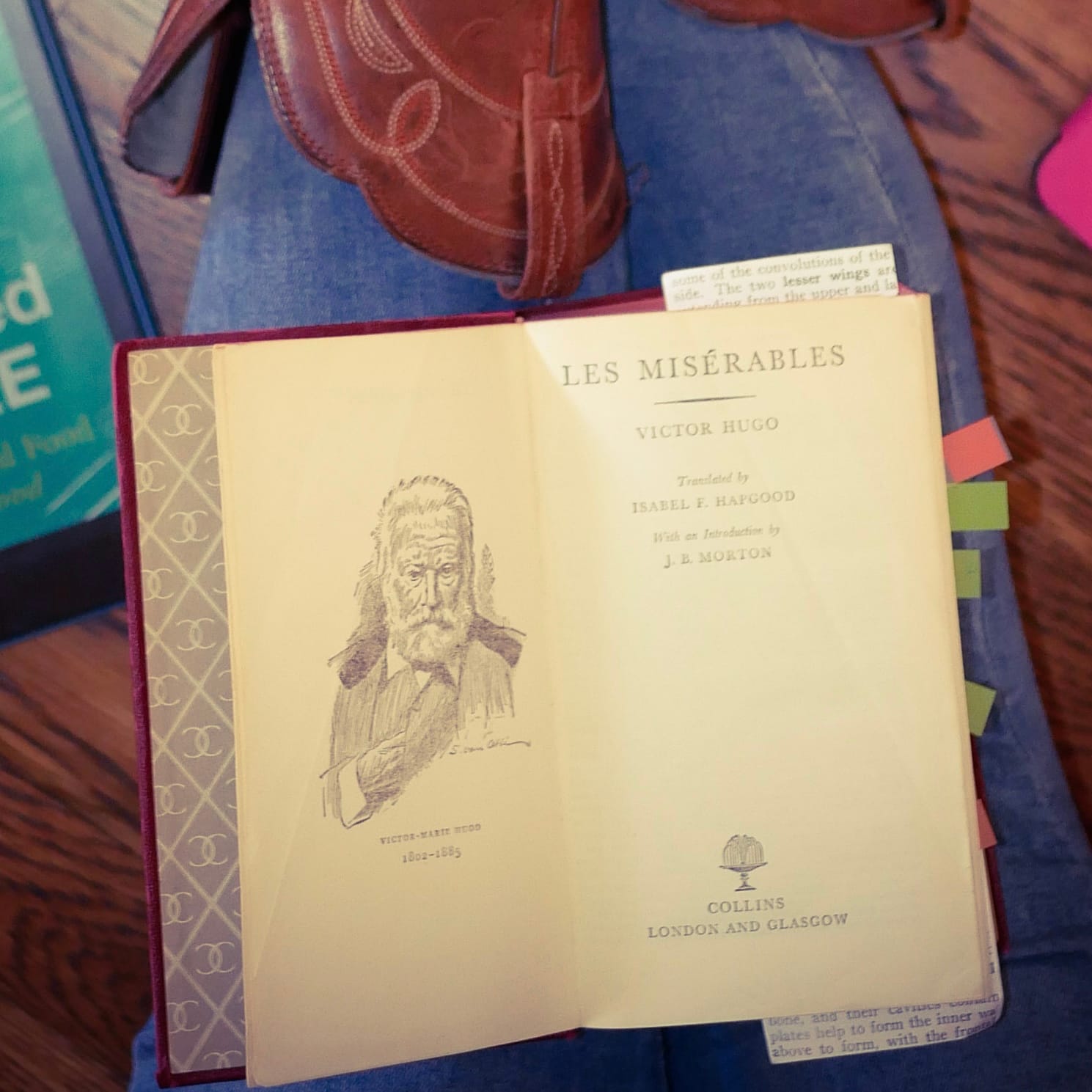
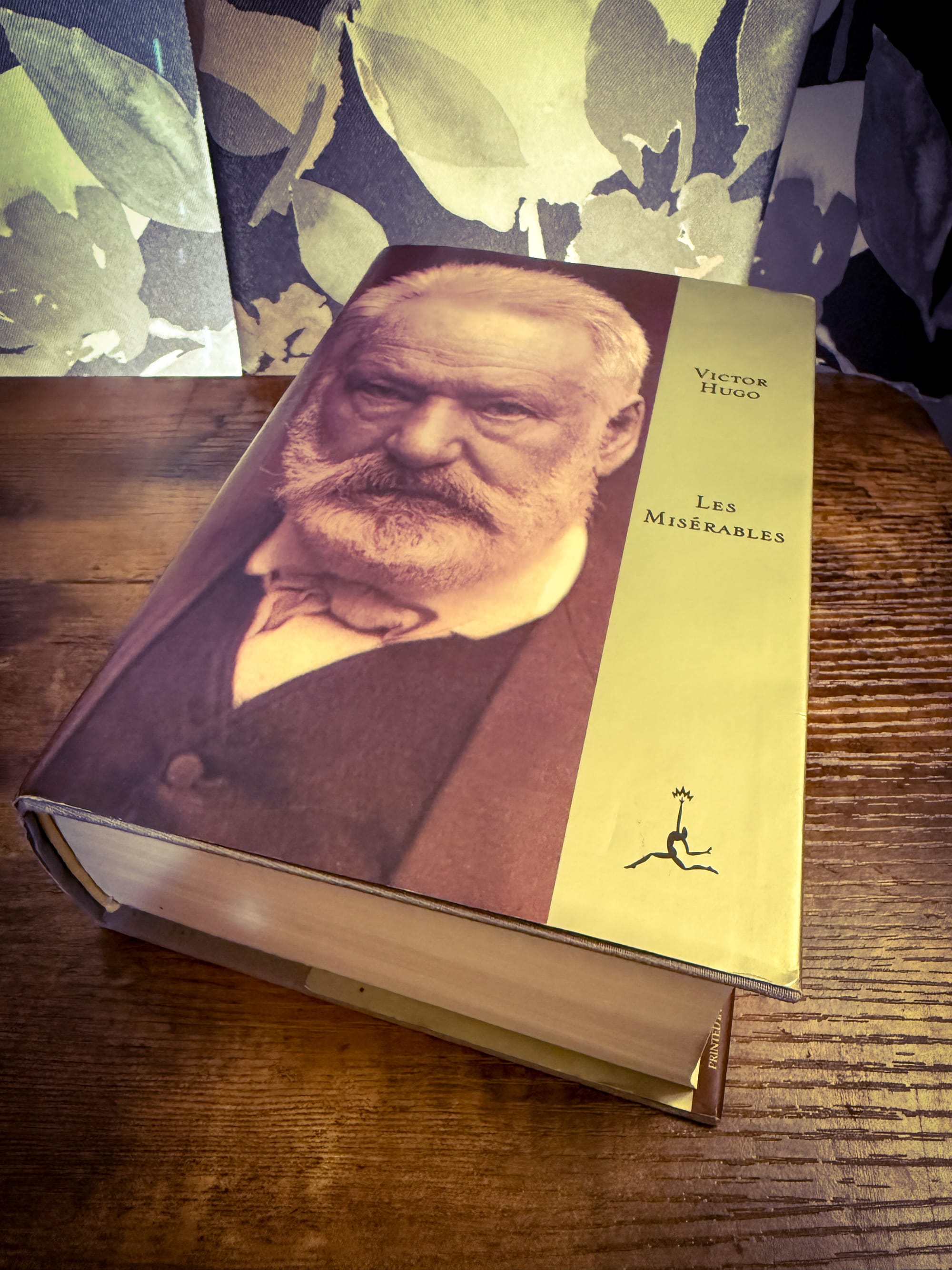
The vintage copy of Les Misérables that I found at the used bookstore and initially started reading in along with a Modern Library edition.
But ultimately, when I began reading it with my brother this fall, I decided to go with the Kindle version. The endnotes in this digital penguin version have been invaluable.
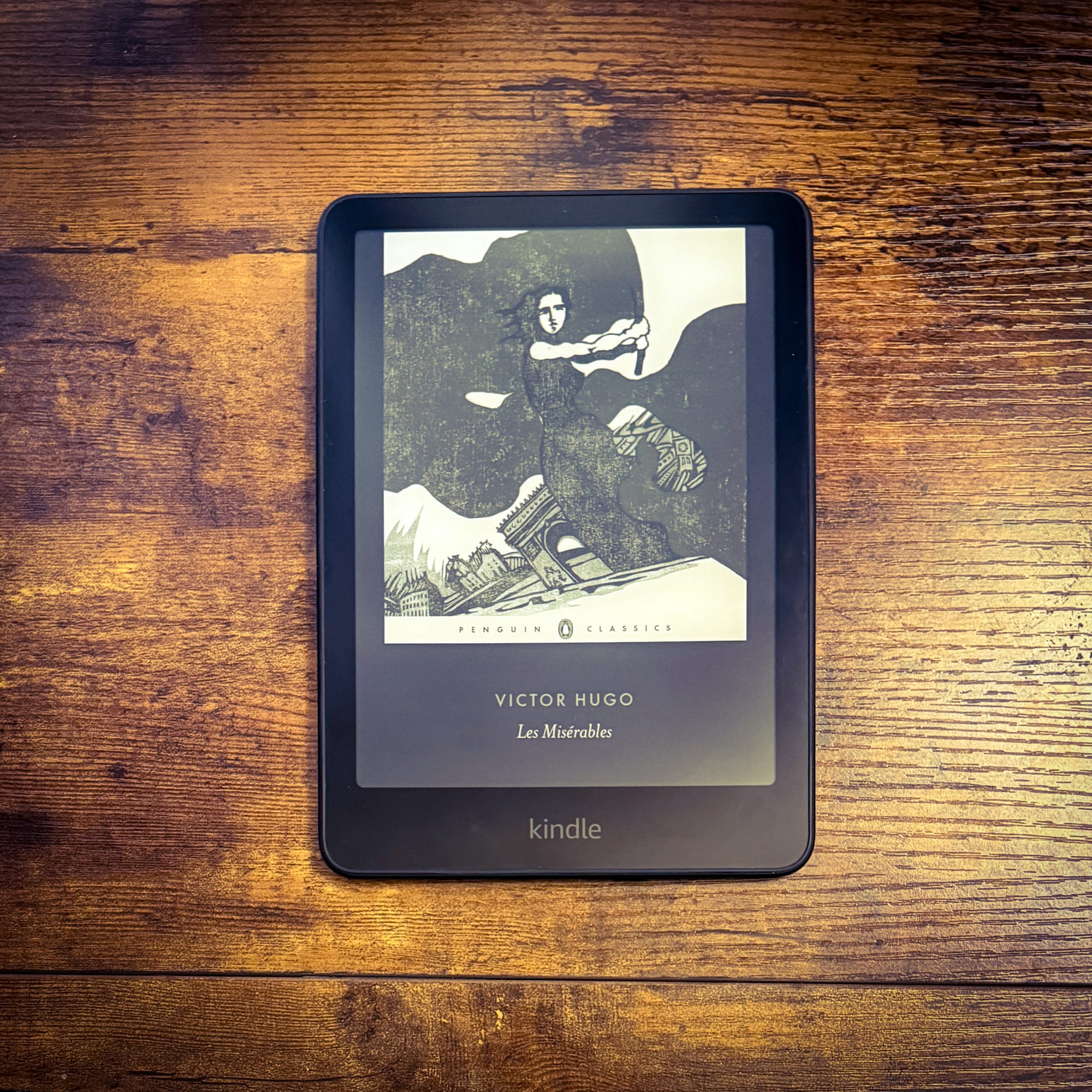
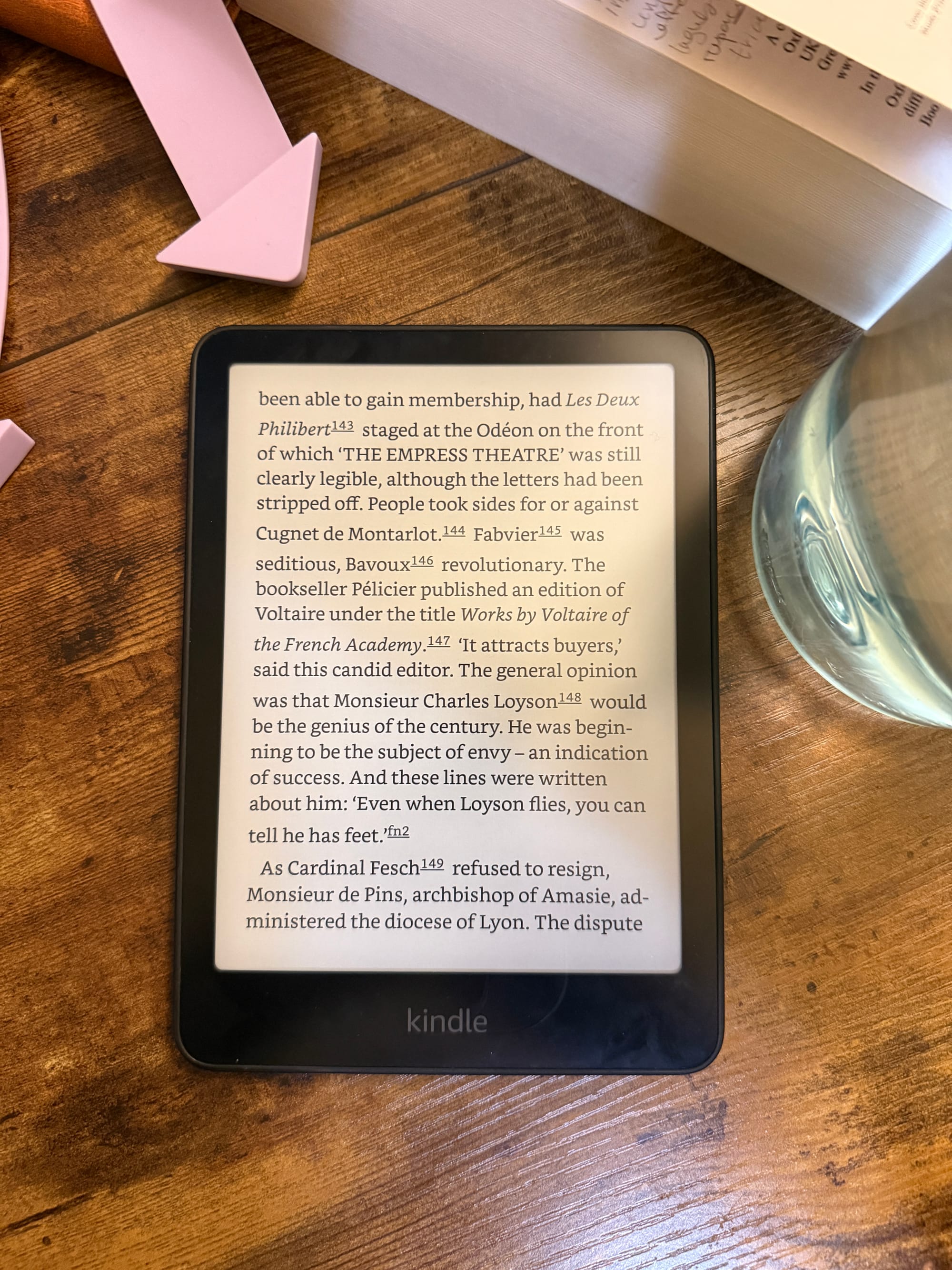
The Kindle version was especially great for the chapter that dives into the year 1817 all that was going on that year. Notice the copious amount of notes in that 4th image.
Reading on an e-reader (for me that is the Kindle) there are also things that uniquely add to the full experience of slow reading. Here are a few:
Less Disruptive.
While reading Dante, Cervantes, or Hugo (and even some nonfiction), I'm often encountering unfamiliar historical references, people, languages, cultural contexts, and philosophical concepts.
The ability to view footnotes and endnotes, look up unfamiliar words, translate phrases, or investigate something with a single touch makes slow reading less disruptive and more immersive.
With a physical book, I have to stop reading, put the book down, and grab a dictionary, my phone, or computer to look things up. With the Kindle, I can do all that without leaving the text. (Also, the Kindle remembers the words I've looked up and where I read them, so I can study them later.)
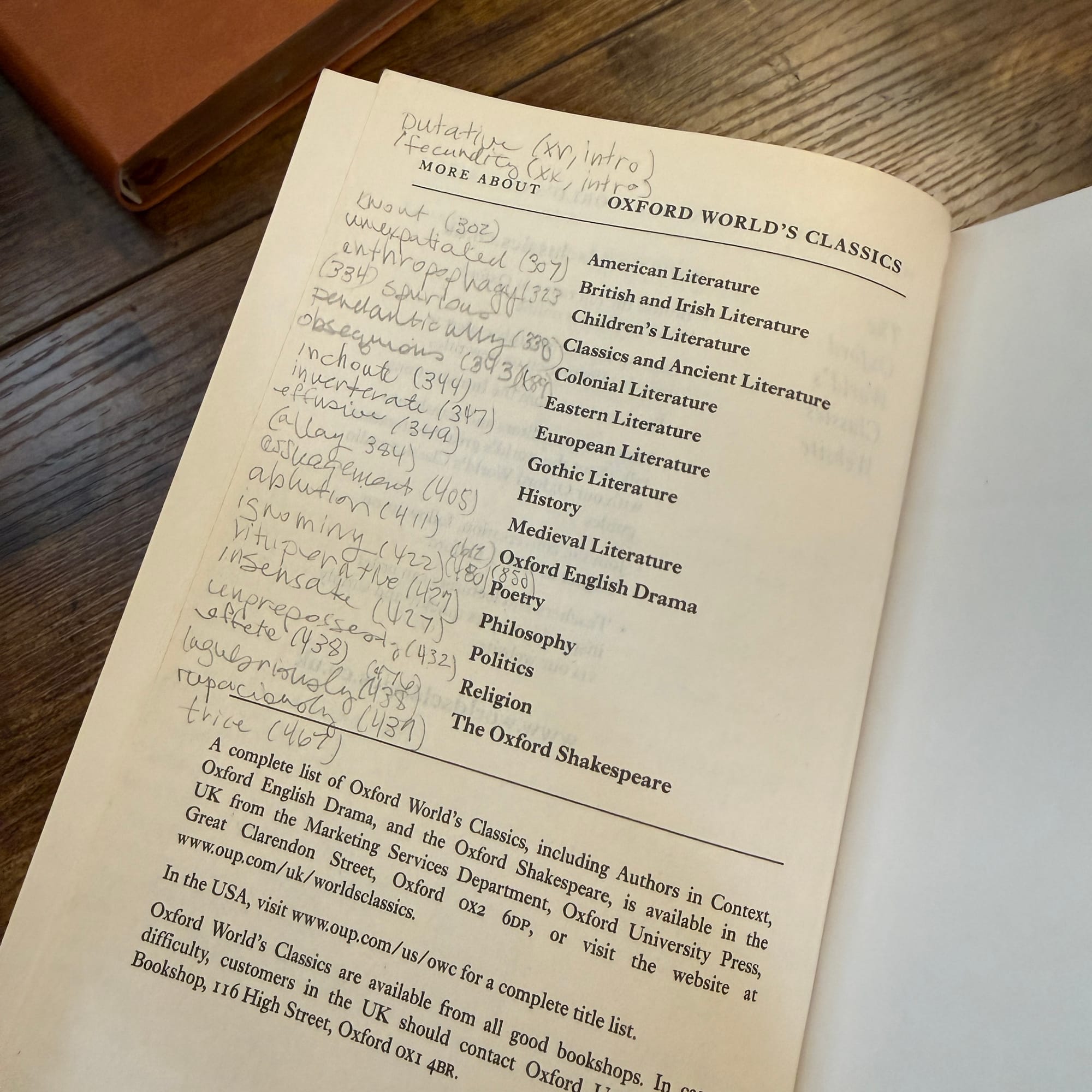
Still, remember to turn off the timer settings at the bottom of your e-reader for the best slow reading experience.
Reasons an e-reader makes for a great slow reading experience:
Portability.
Many of the books that I slow read are big books. Some over 1000 pages. That is a lot of book to haul around. (Nevertheless, it can definitely be done.) The e-reader? So portable. You can throw in your bag and read anywhere.
Notes and highlights are easy.
This is a big one for me. With physical books, I sometimes find myself searching for a pencil or flipping through pages to find something I've highlighted. With my Kindle, taking notes and highlighting is easy, and so is finding them again.
Kindle also allows me to open the app on my computer and access all those notes and highlights. Finding a particular passage in a lengthy book is much easier, and I can often search for it. Plus, when I copy and paste a passage for reference while writing about a book, Kindle automatically includes the reference. I love it. Even when I slow read a physical book, I'll often borrow or purchase a digital copy just for this feature.
Remembering what you read.
I've read about studies suggesting that people comprehend and remember more when reading physical books rather than digital ones. Of course, the research is more nuanced than that, but I always came away with the impression that physical books were better for retention
Yet this year, I read Jonathan Strange & Mr Norrell with a friend. I read it on my Kindle while she read a physical copy. We both absolutely loved this novel. When we met to discuss it, she commented on how much I remembered certain small moments and details that she didn’t. It's anecdotal, of course, but interesting to me, and it's what prompted me to write this post to amend my earlier commentary on slow reading with an e-reader.
Slow reading is a practice, not a format.
The experience of slow reading isn’t determined by whether you are holding a physical book or an e-reading device. Those add unique features to your experience, but don’t determine it.
I think deeply engaging with a book is simply a matter of the text itself and not the format it is in. Sometimes the Kindle makes it easier.
We sometimes treat convenience as though it cheapens an experience, as if something being easier automatically makes it less meaningful. But sometimes removing obstacles that interrupt attentive reading can make slow reading a better experience.
So choose that challenging book, read a little every day, take your time, and enjoy the journey. Whether it's on paper or a screen doesn't really matter.
Future Kindle Slow Reads
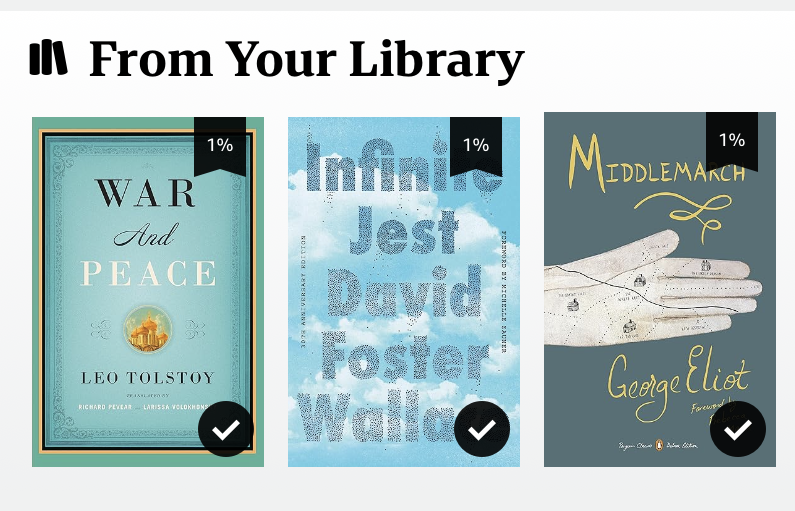
A few books I'm looking forward to tackling on my Kindle:
Infinite Jest by David Foster Wallace, Middlemarch by George Eliot, and War and Peace by Leo Tolstoy.
If you'd like to follow along with my reading adventures, subscribe! At this time, I can't promise how often I'll write, but then again, this is slow reading. 😉


