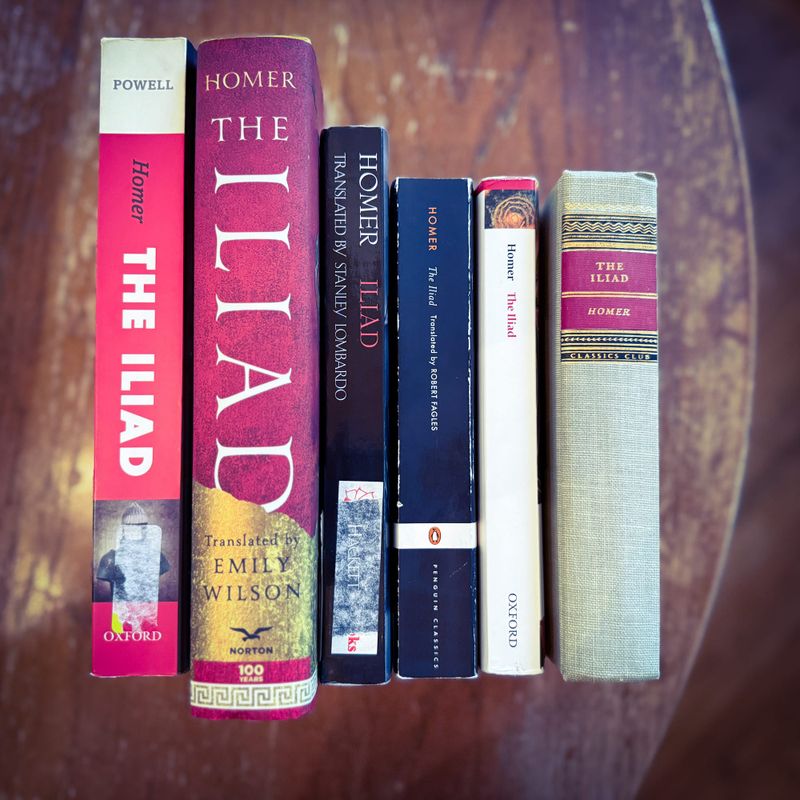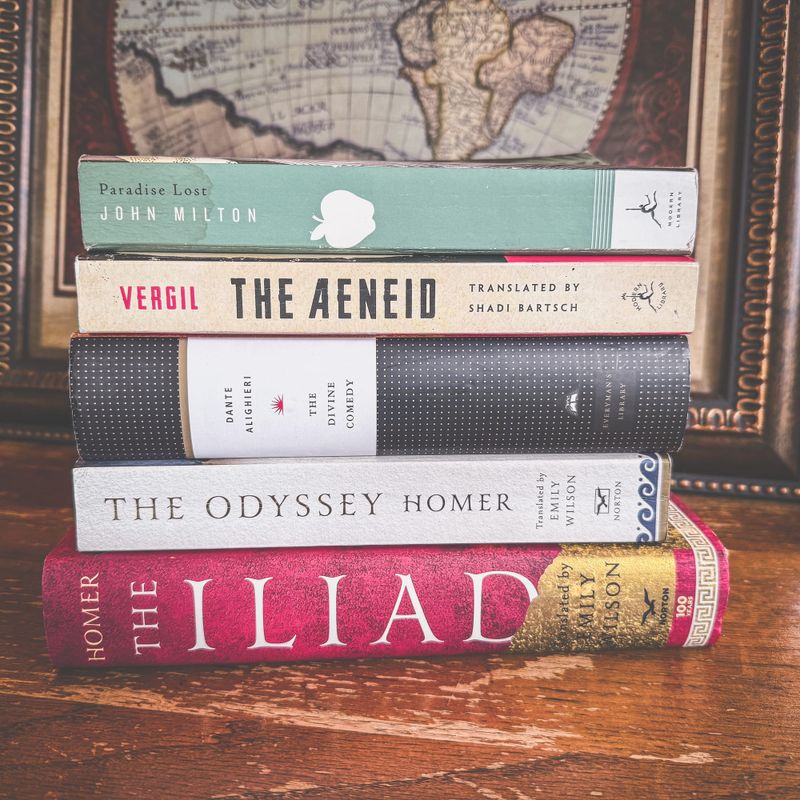
Most of us approach epic poetry very seriously. It is, after all, something mostly read in schools. We think stories from the ancient past are dusty and old. But The Odyssey is alive from the beginning.
It has monsters, danger, drama, and a man trying to get home while trouble grows in his absence. Sometimes the real monsters are human.
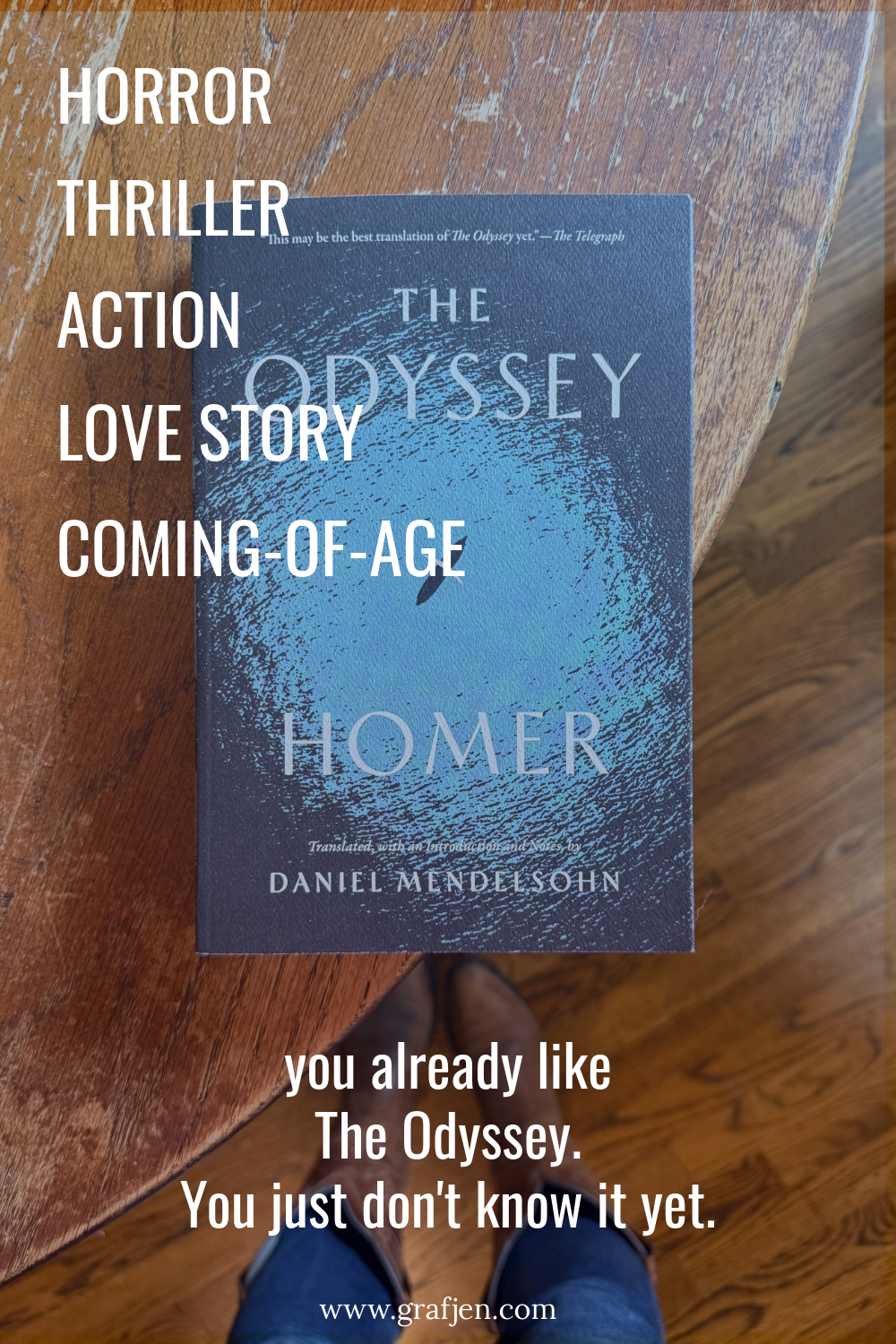
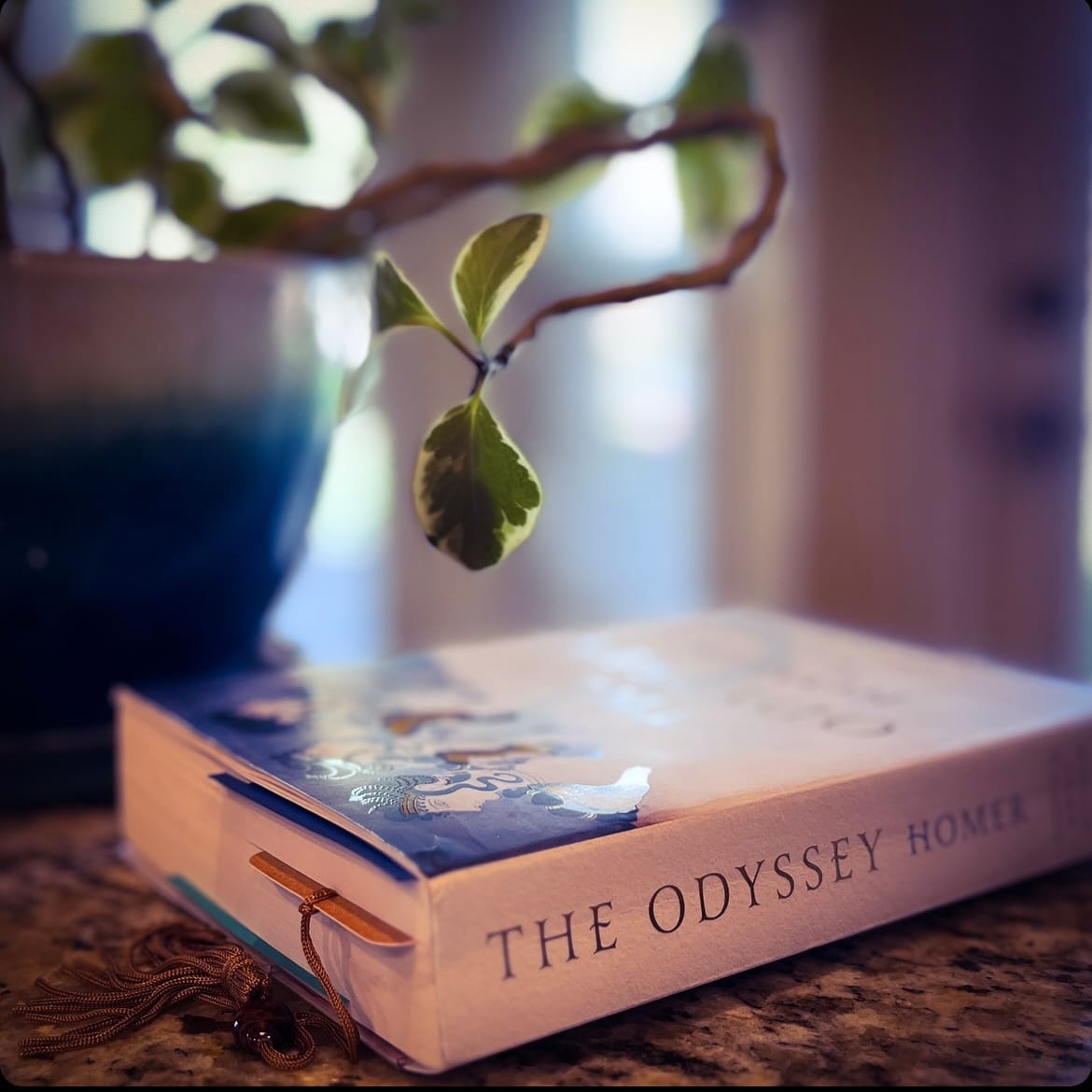
The Odyssey was the next book in my "Epic, Epic Poetry Project," after The Iliad. I read most of it in hospital waiting rooms and a recovery room. My mom was having heart surgery, and I sat for days with her before, during, and afterward reading The Odyssey.
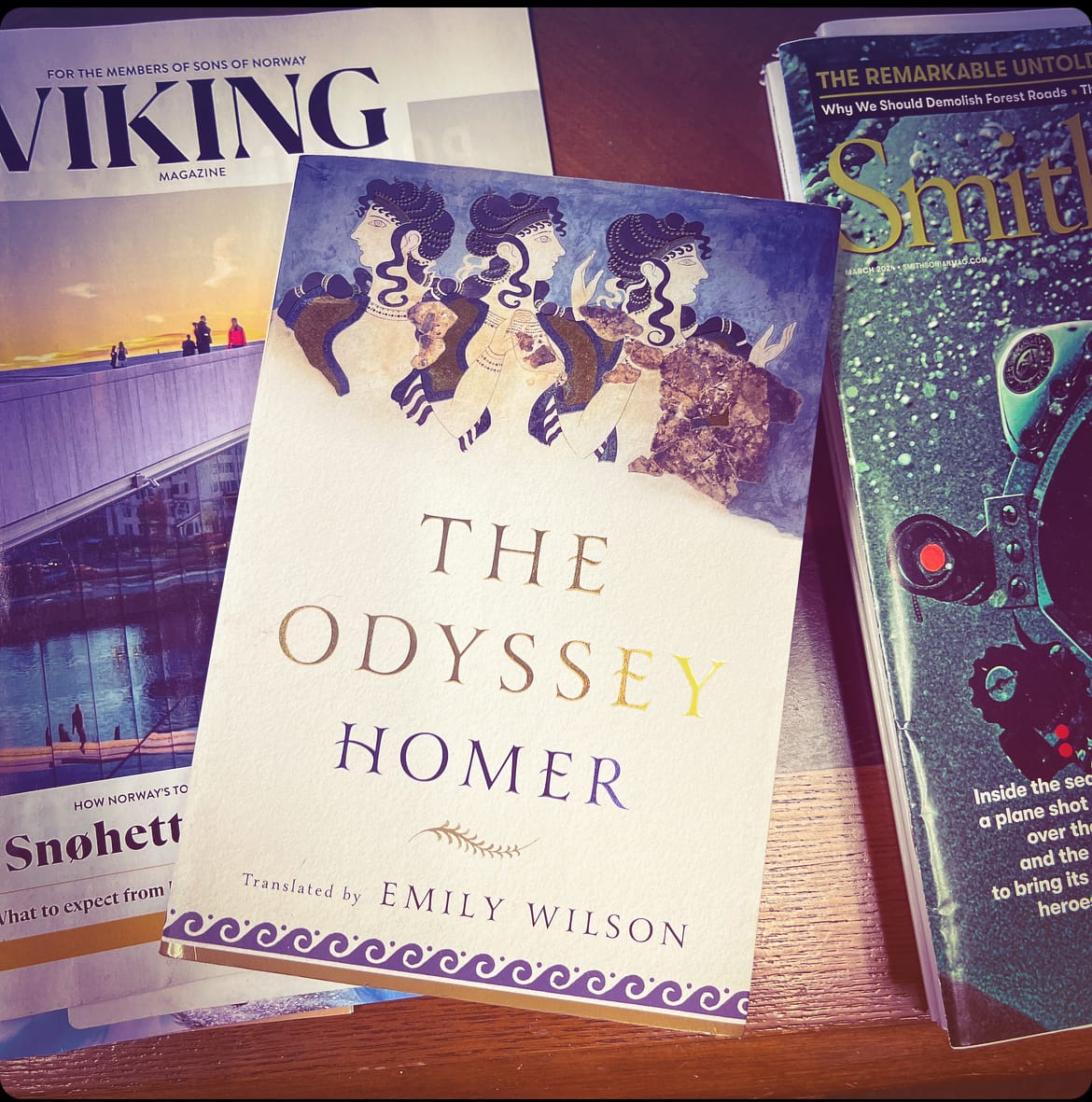
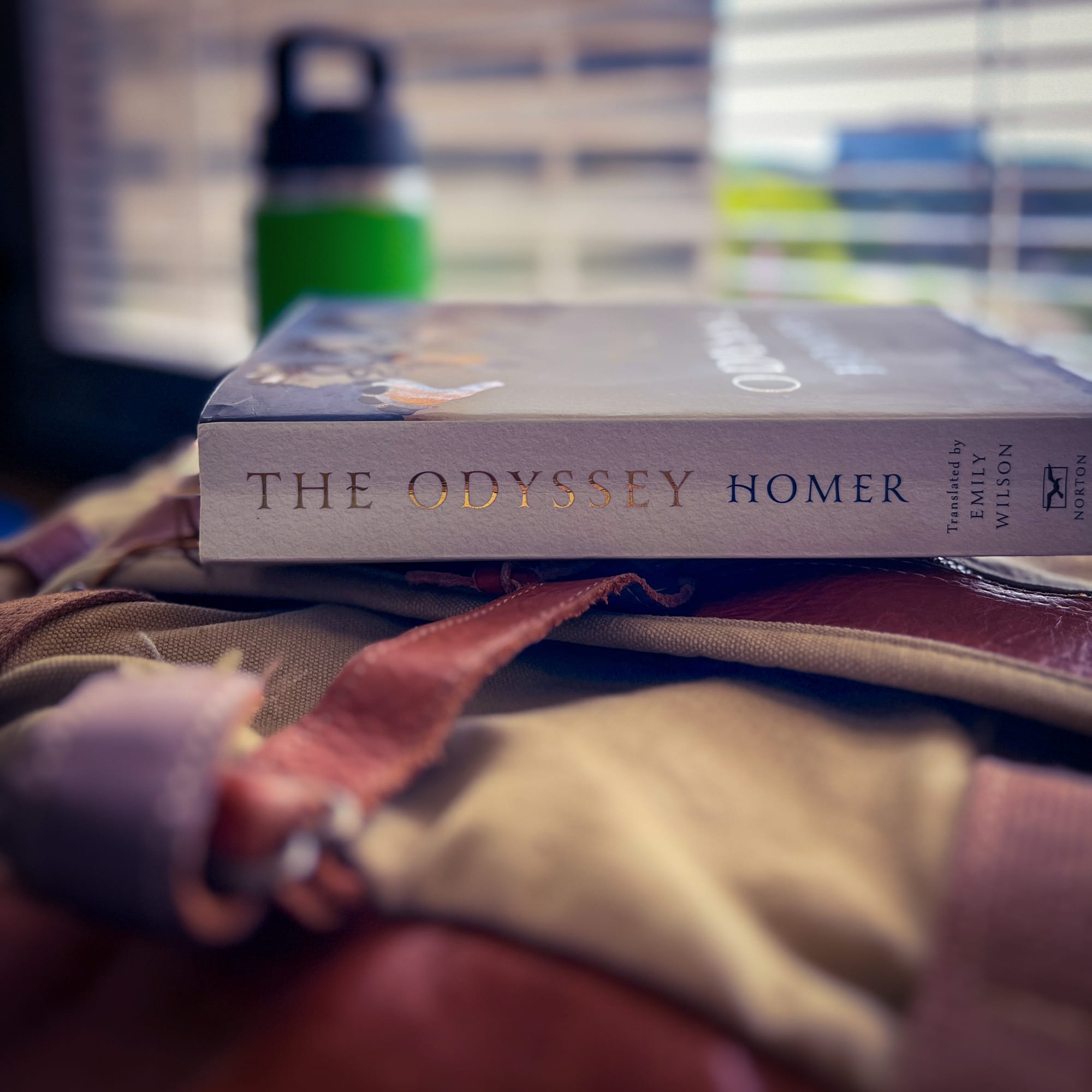
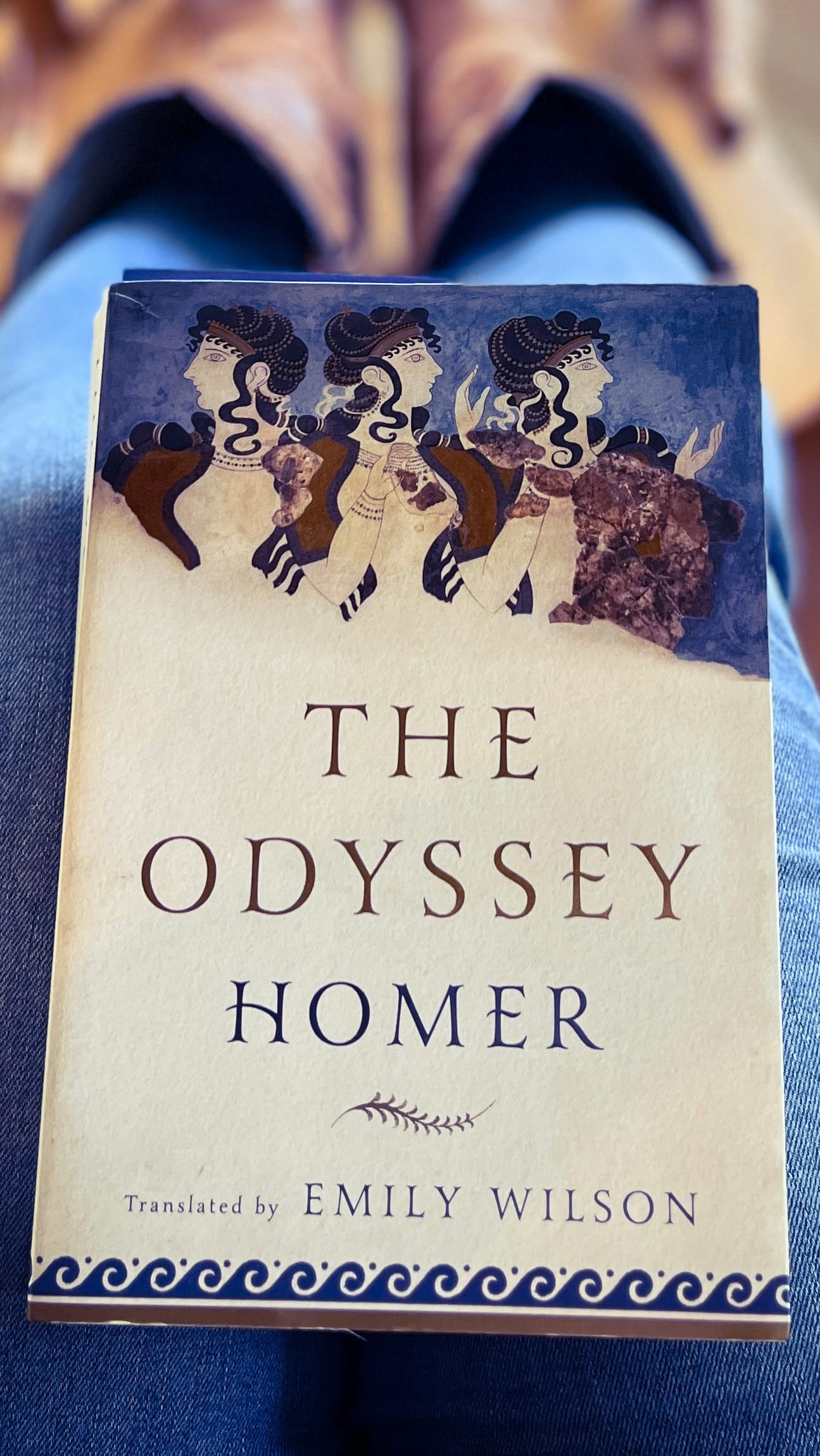
Reading The Odyssey in waiting rooms and hospital rooms.
It sounds strange to say, but this ancient story carried me through that time. It gave me an escape, but it also connected me to something beyond my own worry. I thought of the generations of people who had been captivated by this epic poem before me, and what may have been going on in their lives as they experienced The Odyssey for the first time.
This adventure of a man trying to get home to the people he loved helped me to be a little less consumed by my own fear for a while. And that allowed me to be more present for my mom.
What Surprised Me
Honestly, I started this one a little sad. I had just finished The Iliad and wasn’t ready to leave that world behind or say goodbye to those characters. It kind of leaves you hanging even though we all know the ending to that story. But the project must go on, so I picked up The Odyssey next.
It has a completely different feel. The Iliad is about being away from home, at war. The Odyssey is about the long, hard (and wildly adventurous) road back. Odysseus is trying to get home, and it is taking him a very, very long time. Nearly ten years.
It is also a sort of coming-of-age adventure for Odysseus’s son, Telemachus, as he ventures away from home in search of news of his father and grows along the way.
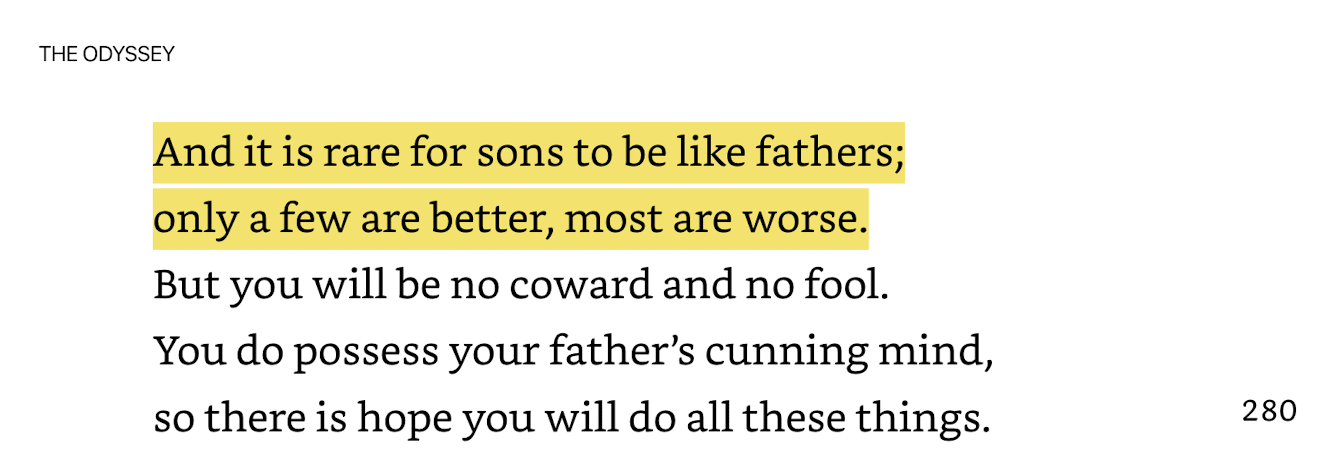
I didn't expect to be as surprised by The Odyssey as I had been by The Iliad, mainly because I went into The Odyssey knowing I would enjoy it. What did surprise me was that it was more of an adventure than I thought it would be, with journeys across the sea and even into the underworld, magic, a sorceress, gods, and monsters. The gods remained very involved here too, but not necessarily as intensely as they were in The Iliad. It was even more of an adventure than I expected and that surprised me.
Mild Spoilers:
I was surprised by how genuinely horrified I was in Polyphemus's cave, listening, as much as you can “listen” while reading, to the sound of a friend being eaten. It was more disturbing than most horror novels I've read. I was also surprised by how nice it was to see Menelaus again, even if he wasn’t my favorite in The Iliad, it was like seeing an old friend again after many years. And then there was the trip to the underworld, which was creepy and sad at the same time. Little did I know that journeys into the underworld would show up again and again.
Clever, Cunning, Condemned
Odysseus shows up in The Iliad, but not really as a main character. He’s the one with the ideas, the one the others listen to. Wise. Clever. Resourceful. Later in the story of the Trojan War, the Trojan Horse is his idea.
But it's in The Odyssey where you really get to see his cleverness and cunning. (mild spoilers)
He talks and schemes his way out of situation after situation: the Cyclops, the sorceress who turns his men into pigs, and more. A story like this could really only be survived by someone clever and cunning, with a little help from the gods.
Here's what I find fascinating, and what I think is one of the best examples of how connected these five epics really are: the Greeks saw Odysseus as clever.
But the later epics see Odysseus differently. (mild spoilers)
In The Aeneid, the Trojans hate him for that same cleverness. To them, he's wily and deceitful, never clever. "Beware the gifts of Greeks." And later still, in The Divine Comedy he is in Hell, not in Limbo with the other virtuous pagans. One man, different judgments. It really does depend on your perspective.
What I describe in the spoiler section above is one of the main reasons I love reading these epic poems back to back. Seeing the same character from different perspectives and across different periods of time is fascinating, and you really feel like you are part of an ongoing conversation.
I also found myself thinking about Penelope. Her whole existence seems to revolve around staying faithful to a husband who has been gone for twenty years, while he is not expected to do the same. She waits, weeps, and uses weaving to keep the suitors away. I also wondered how much of her grief was really for Odysseus and how much was for the life his absence had left her trapped in.
Two Years Later
It’s been two years since I read this, but certain things have stayed with me:
Mild Spoilers for The Odyssey
The crunch of a friend being eaten by a Cyclops, the trip to the underworld and what it took to get there, and the sea. They spend so much of the poem on it that it almost feels like another character. I remember it calm, wine-dark at night, rough during the storms, and terrifying as Odysseus passed between the monsters. I also remember how clever he had to be just to make it home, and how, once he got there, he had to be just as clever to take his house back.
A Small, Practical Note
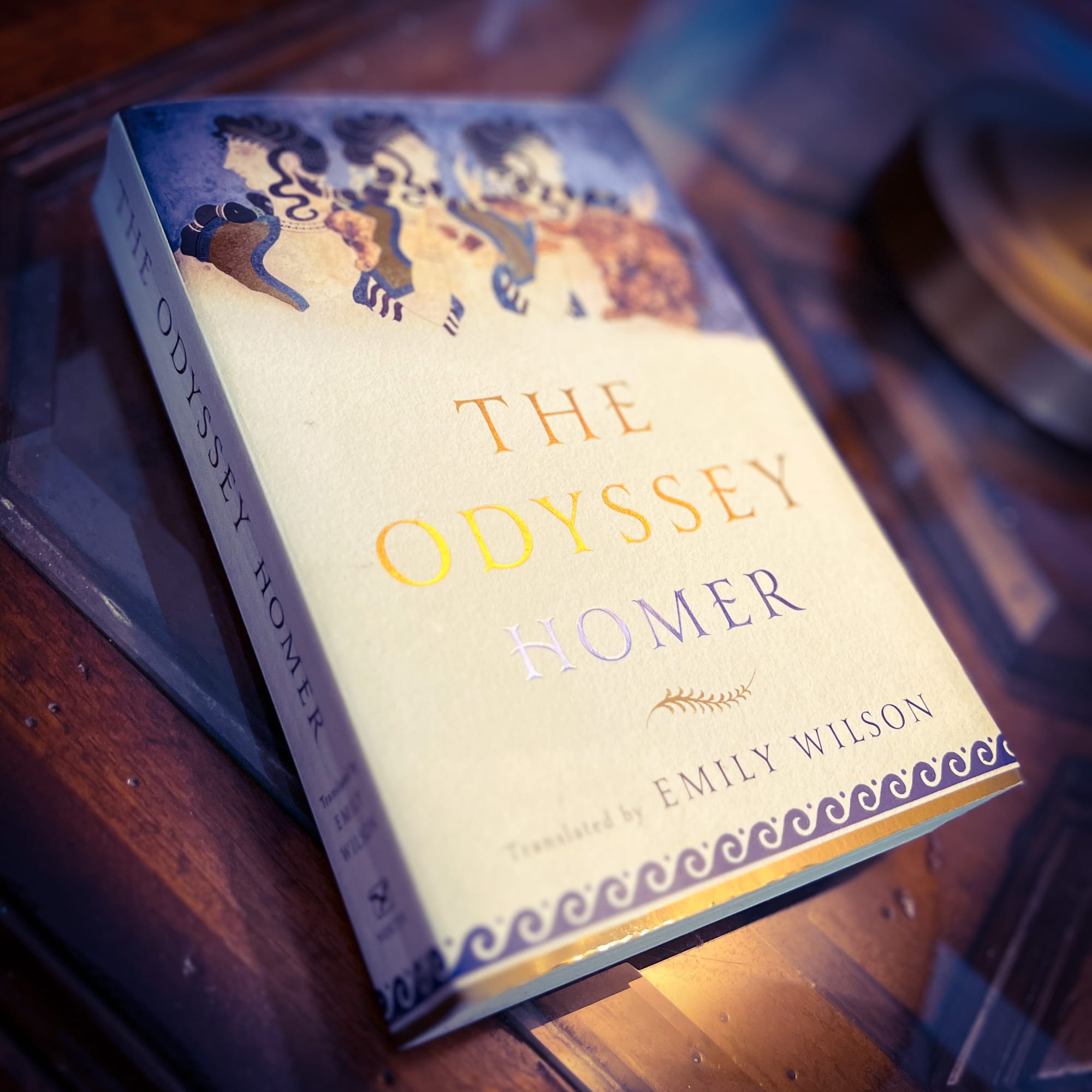
I finished the last half of The Iliad in Emily Wilson’s translation and decided to stay with her for The Odyssey.
I found my copy, a like-new paperback, at a used bookstore for two dollars. Two dollars! If you’re on a budget and building your own epic poetry library, don’t skip the used bookstores. The deals are genuinely worth it.
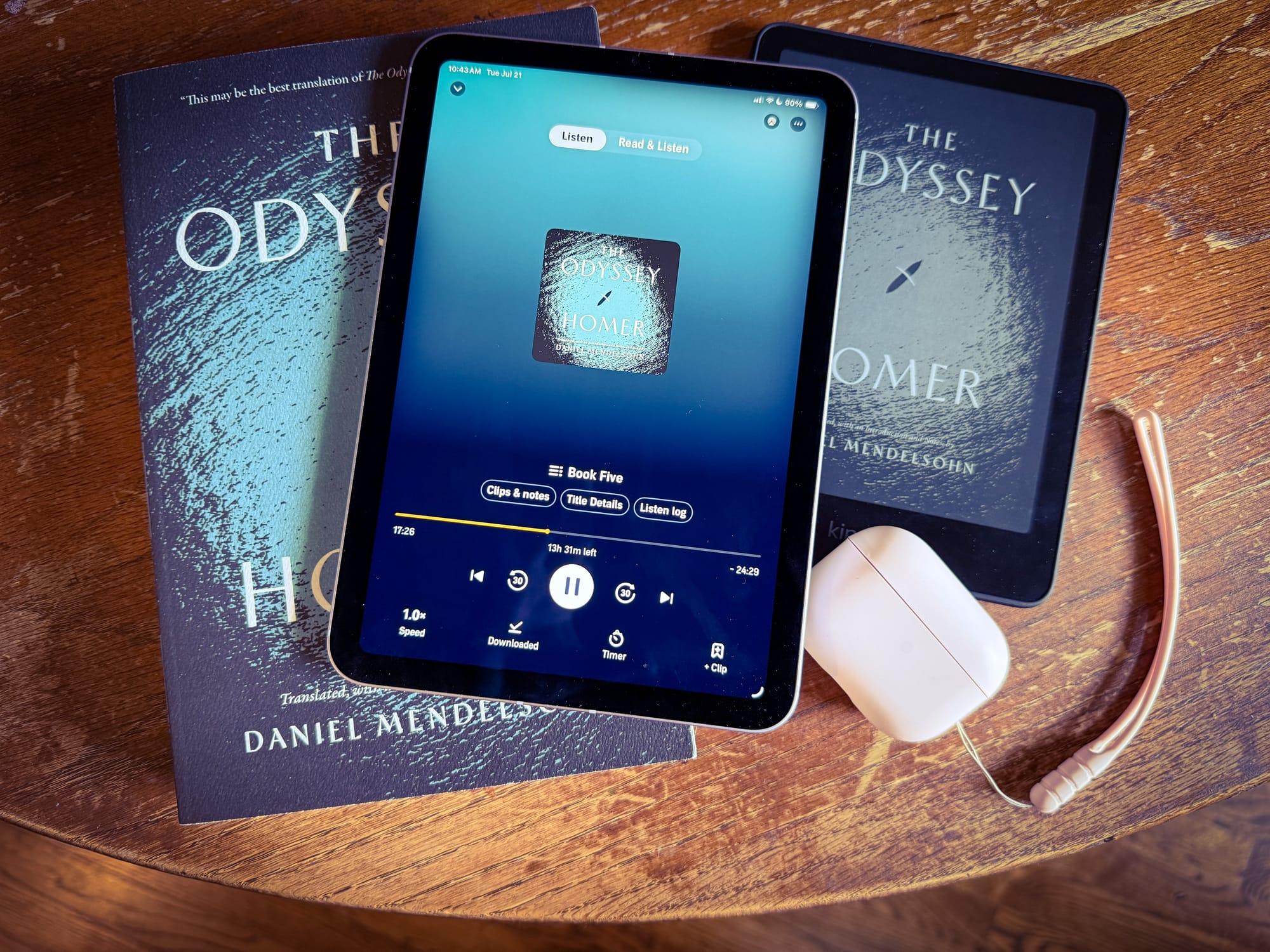
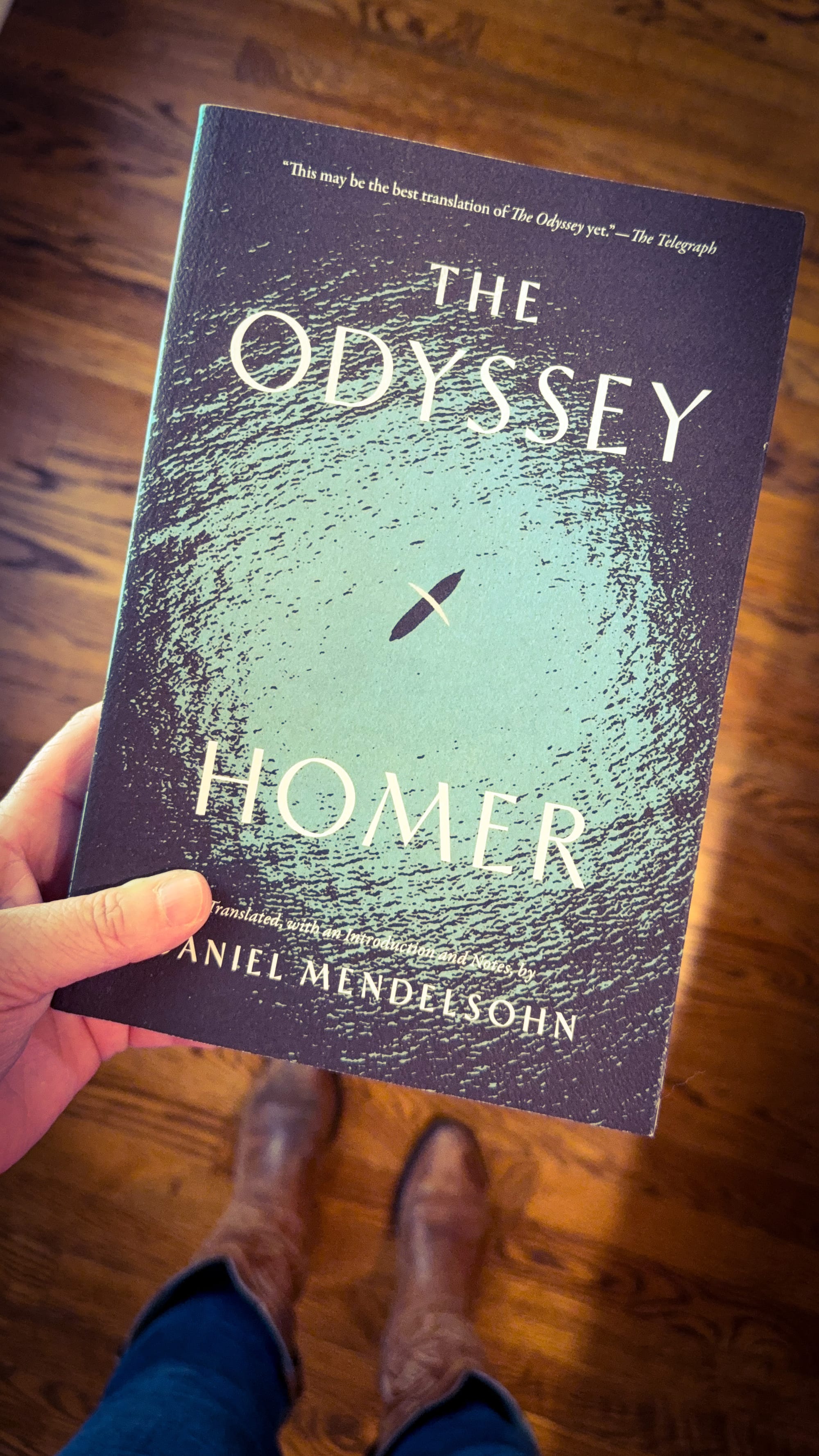
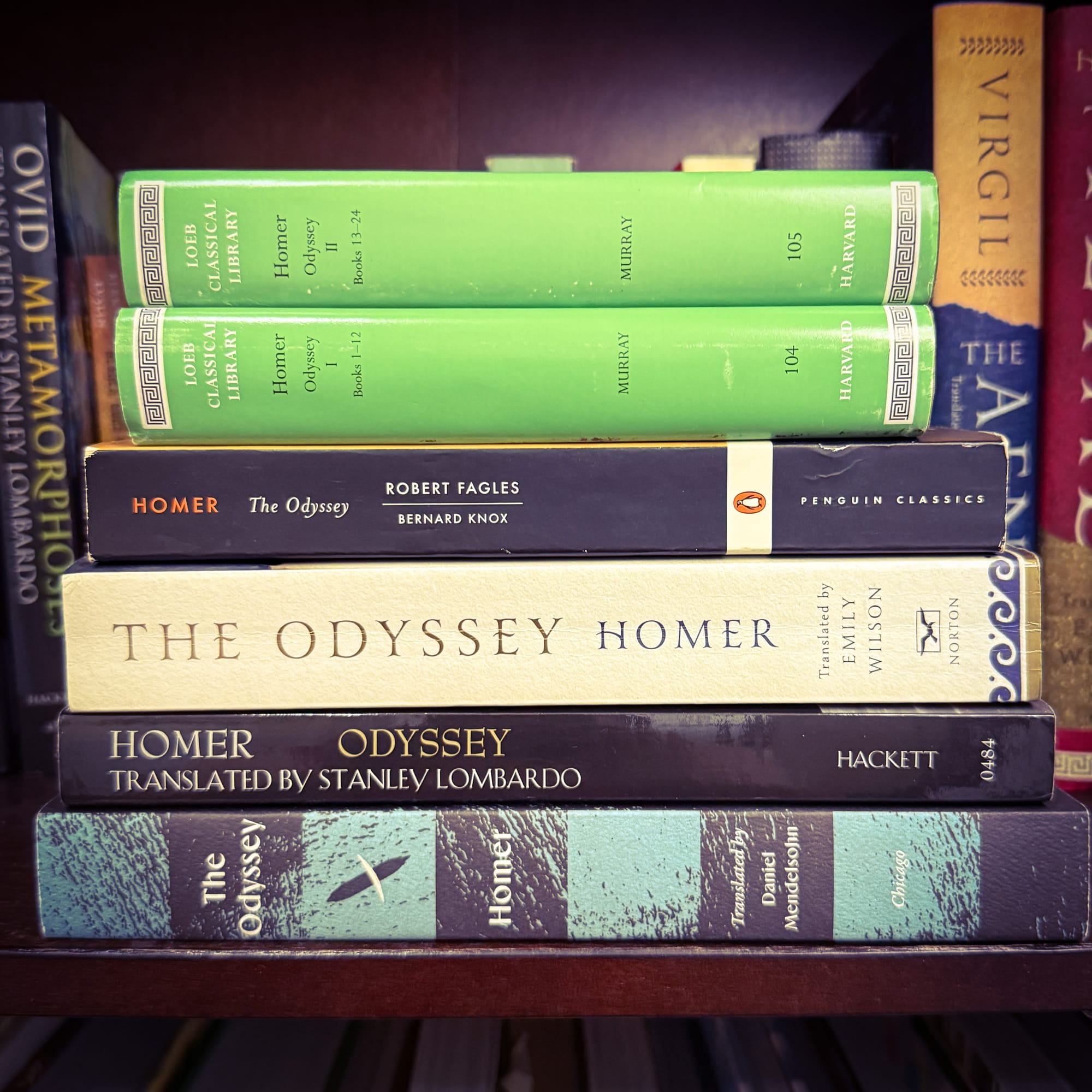
2026 Update: I recently got another translation of The Odyssey by Daniel Mendelsohn and he discusses in his introduction that a lot is left out of the Emily Wilson translations so I do plan on reading it again.
If You're Doing Your Own Epic, Epic Poetry Project
If you’ve never read The Odyssey before, here’s what I’d suggest:
1. Read The Iliad first.
You don’t need it to understand The Odyssey, but knowing the people and the world Odysseus is returning from adds another layer to the story. But if you are doing the Epic, Epic Poetry Project, then you want to read them in order.
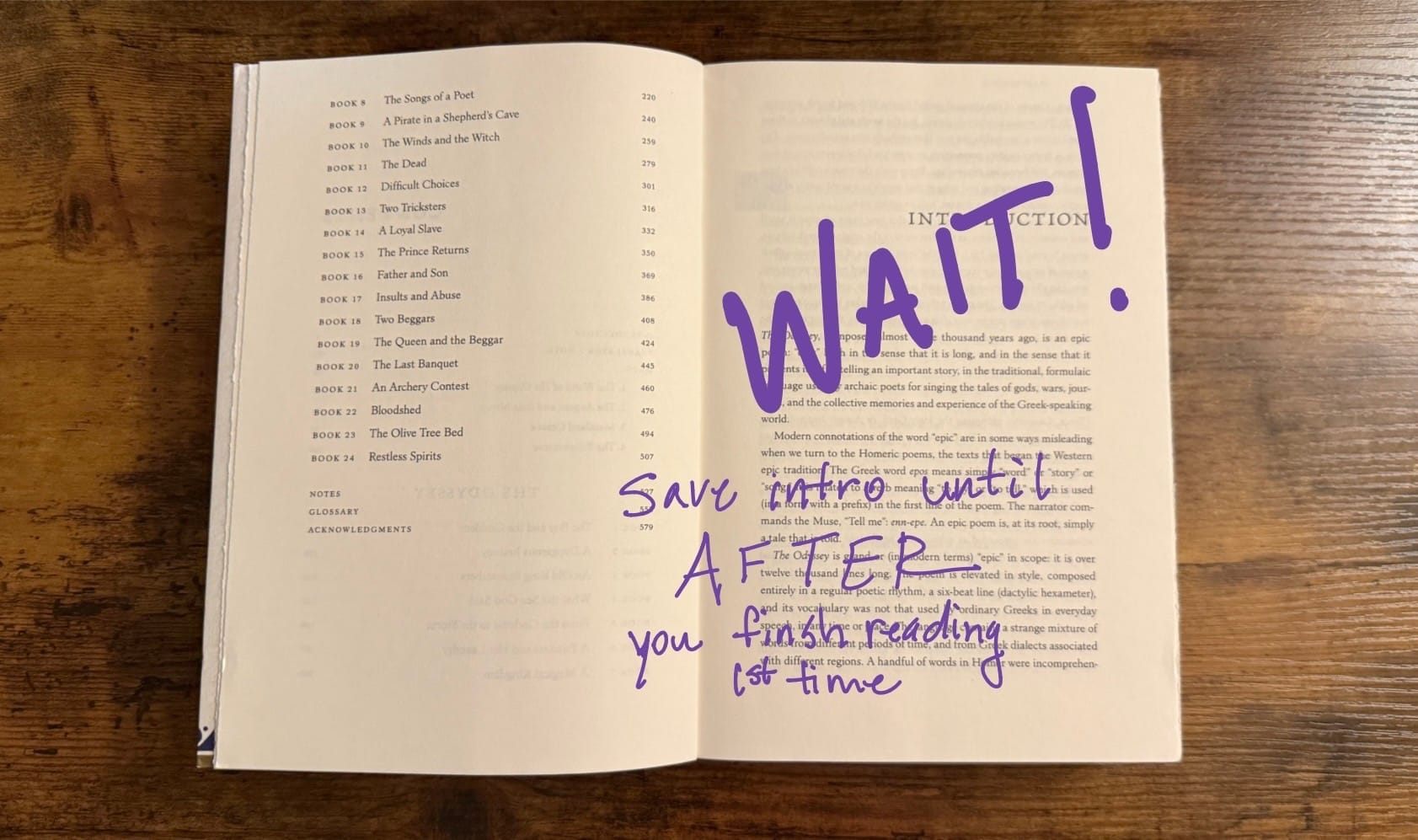
2. Save the introduction for AFTER you finish your first reading.
It will probably tell you the story before you’ve had a chance to experience it yourself. Go in blind.
3. Read for the experience, not the scholarship.
Read with abandon. Absorb yourself in the experience of the story, the language, and the poetry.

4. Choose a translation you think you’ll enjoy.
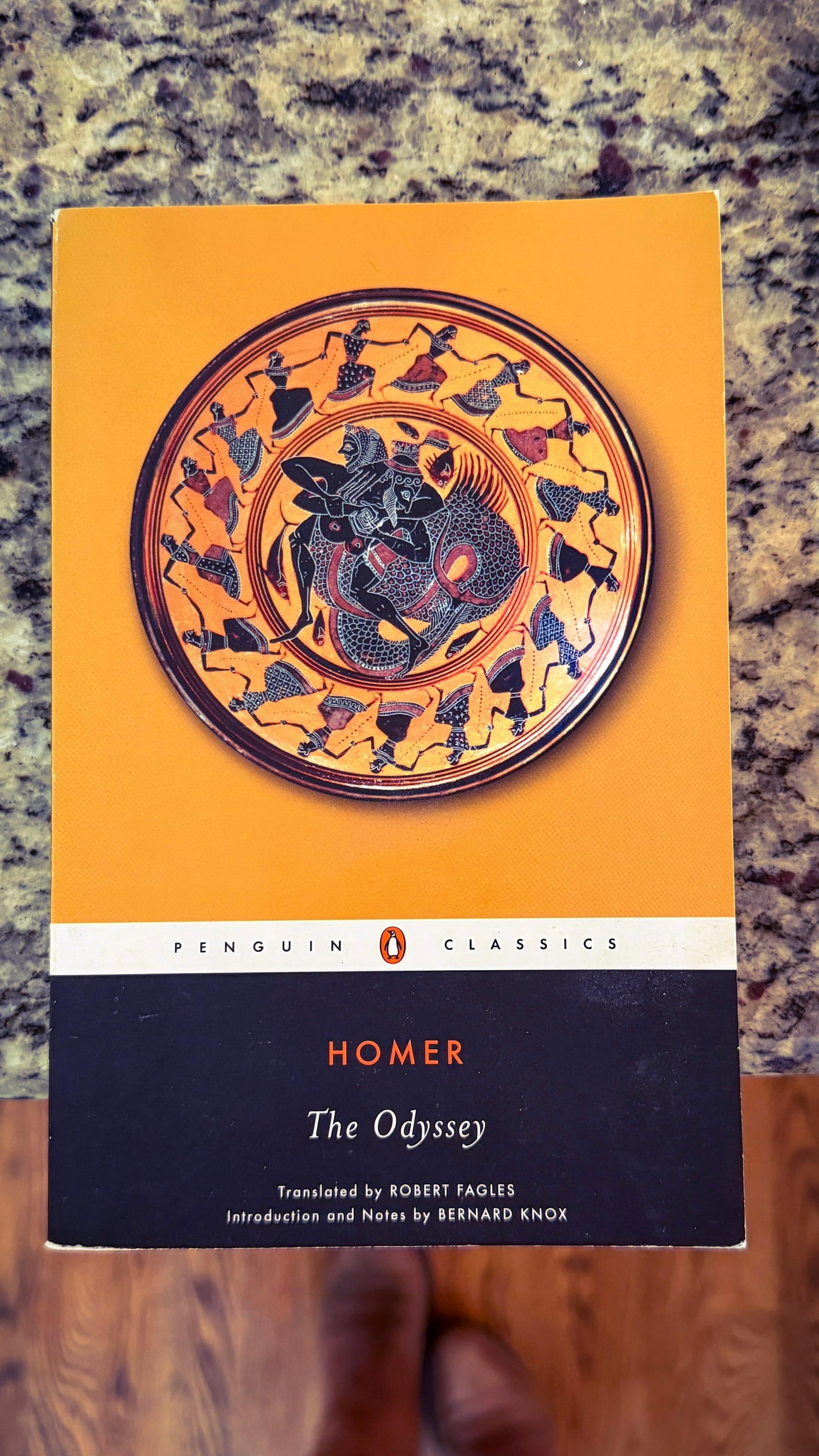
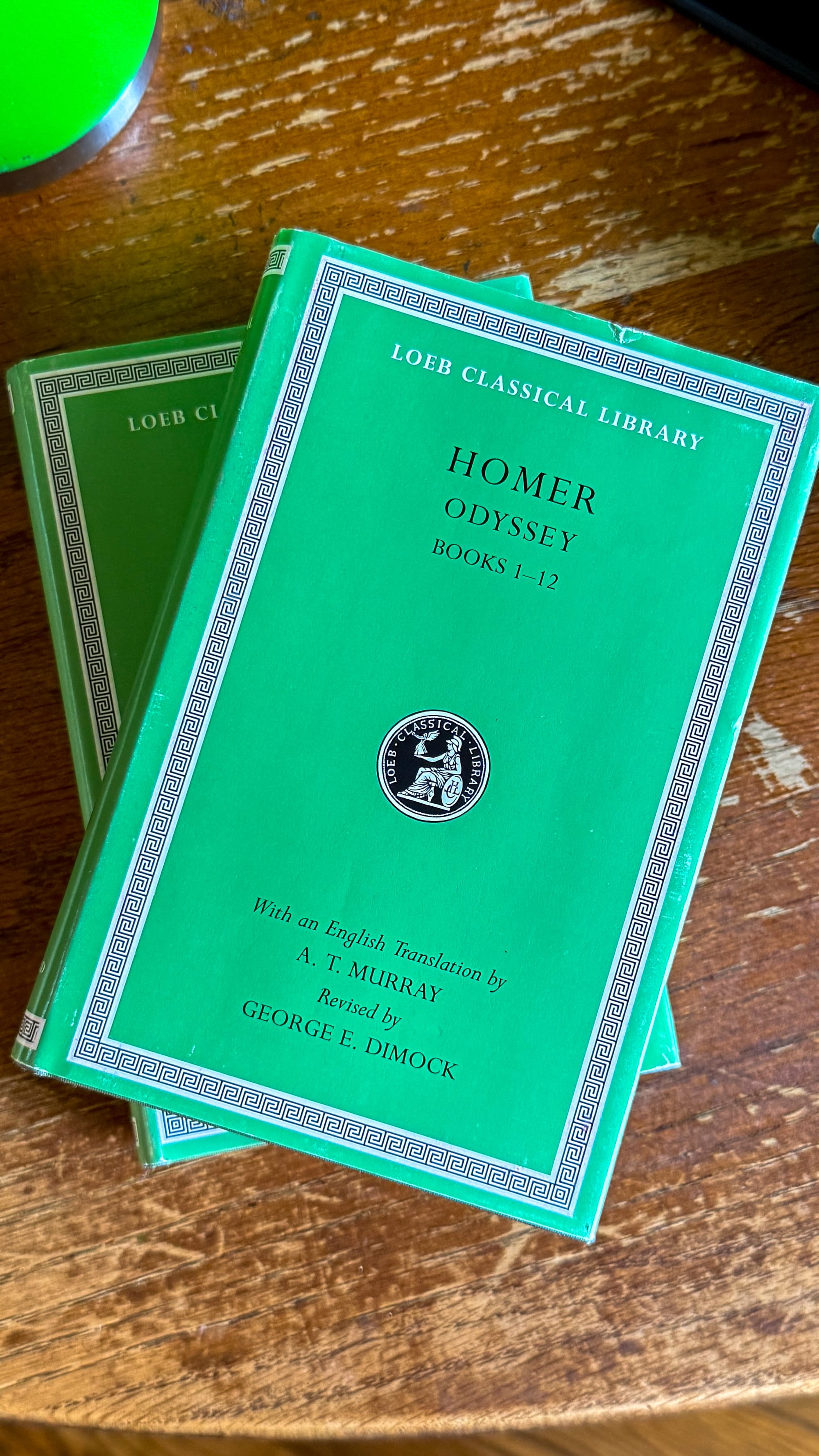
More on how to pick one here. This is specifically for your first reading. You want a translation that works for you. There are many great ones to choose from.
5. Read AND Listen.
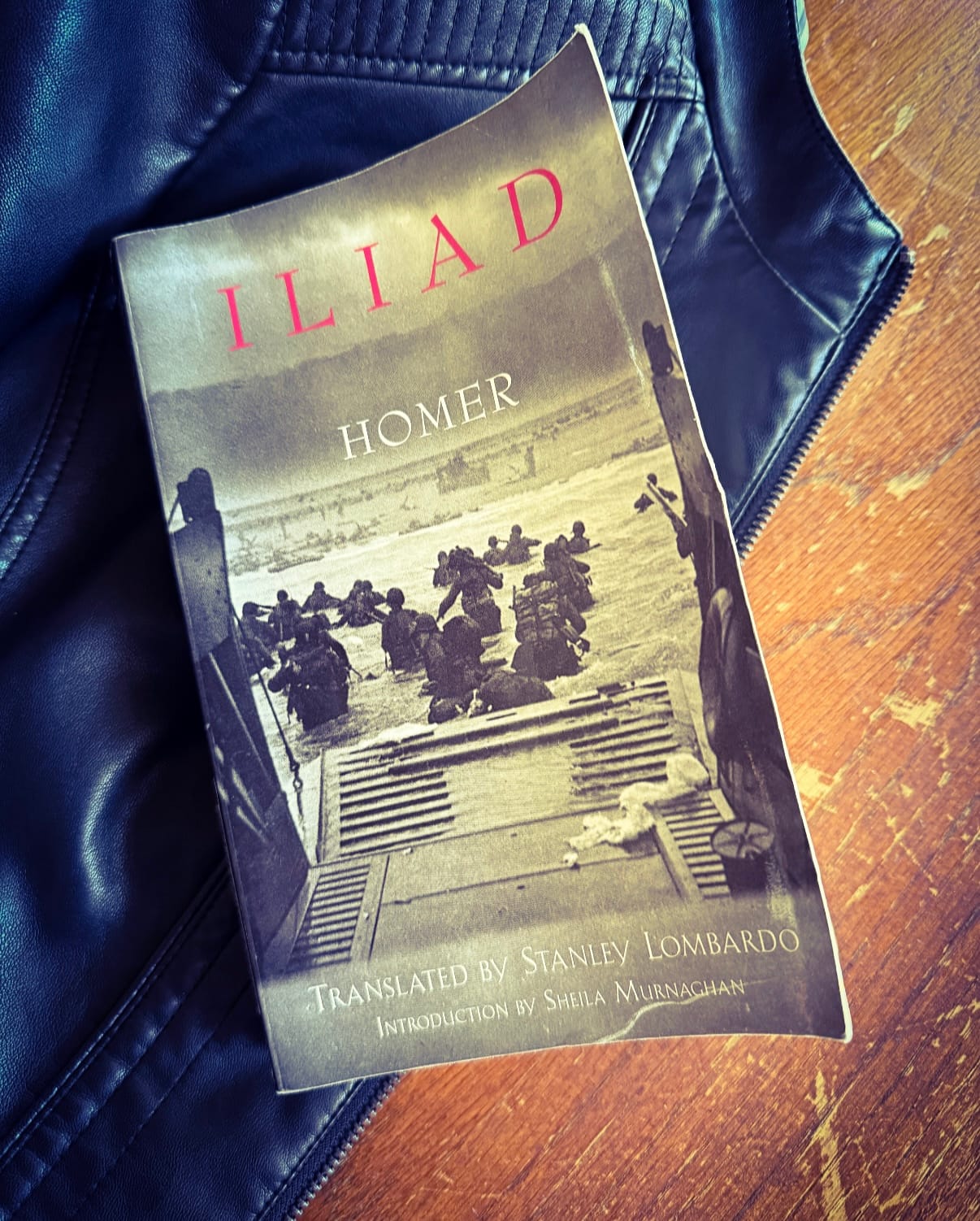
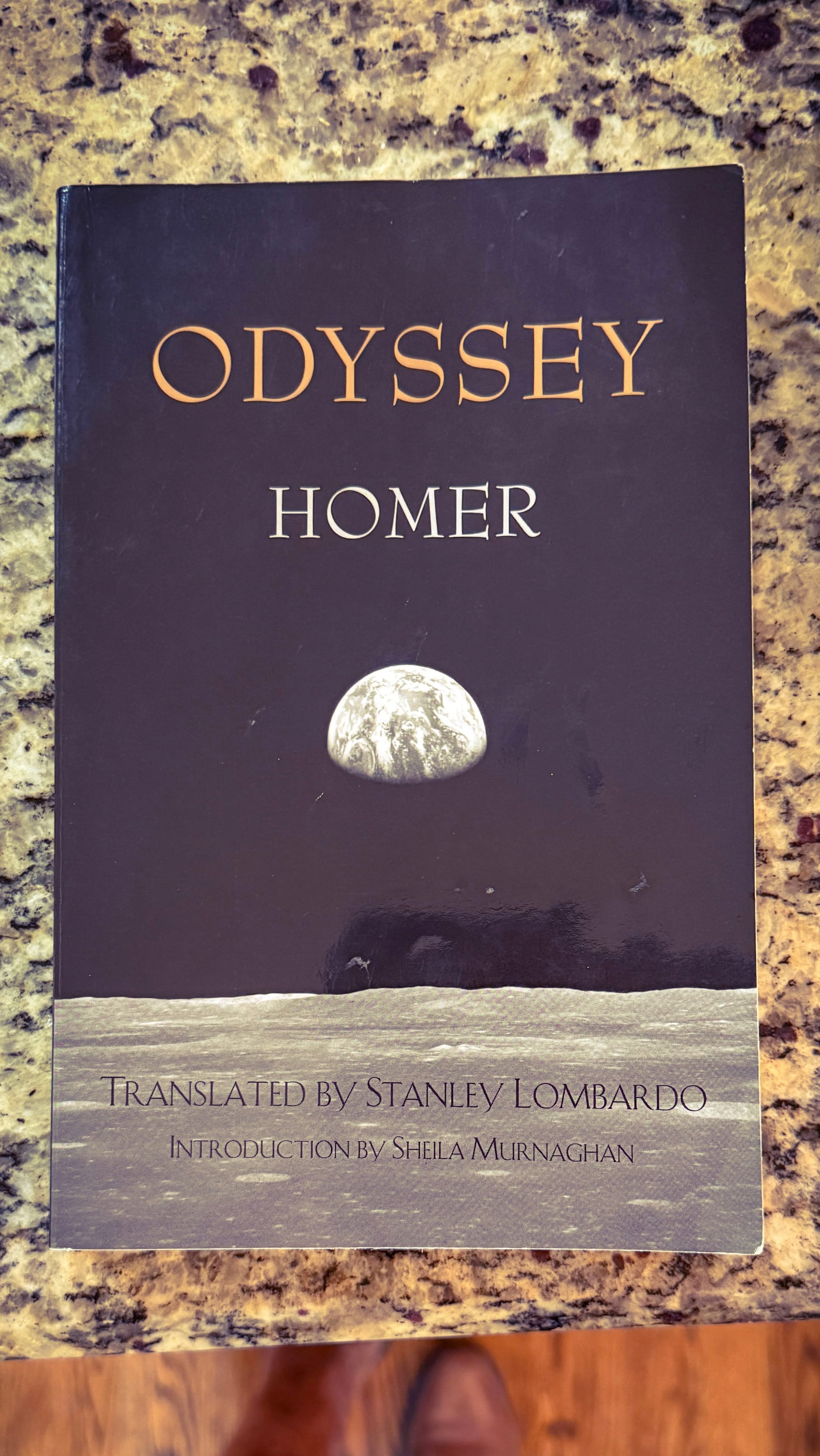
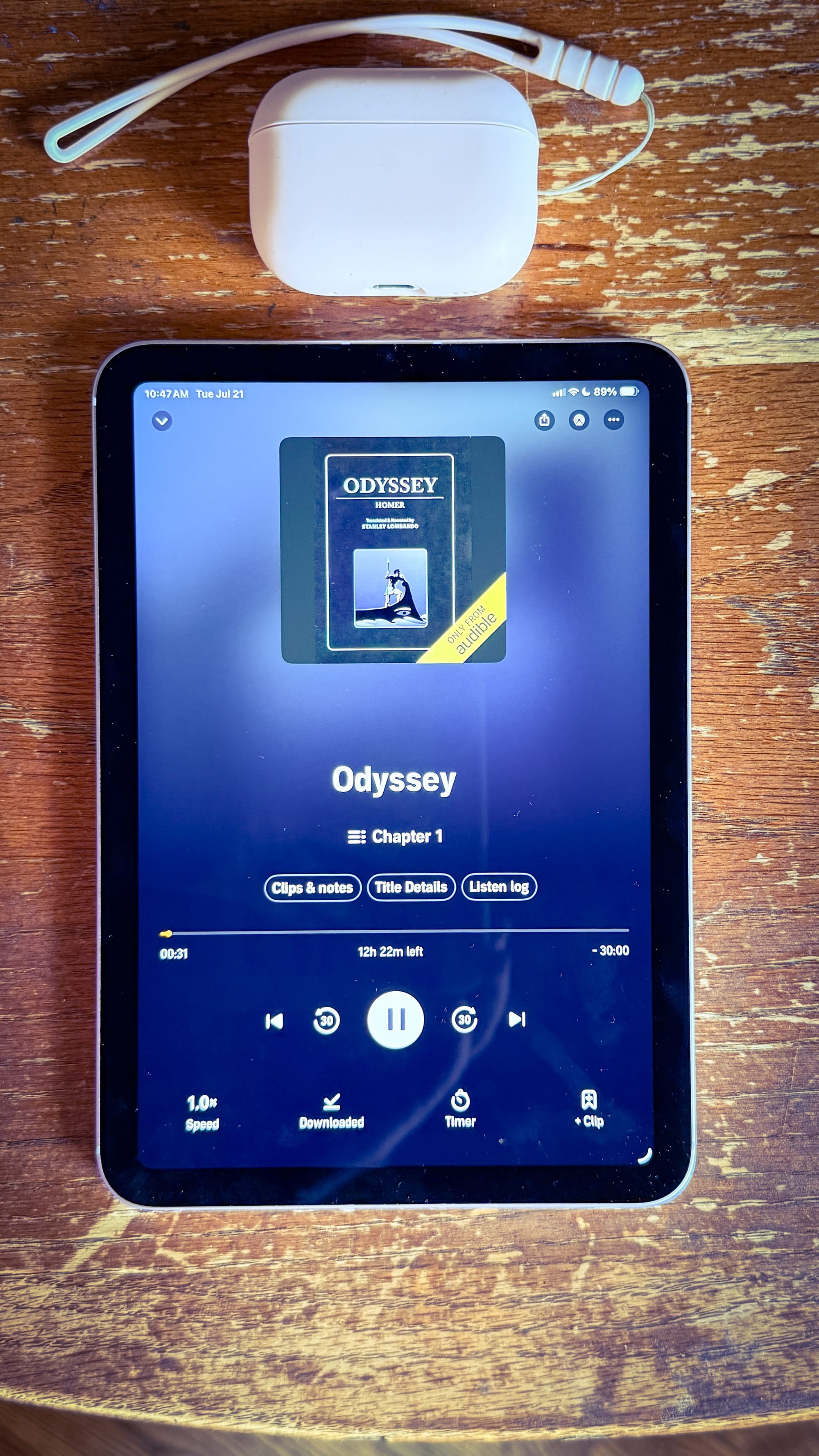
Sometimes it’s fun to read, for example, Book 1 and then listen to that same section again while driving or walking.The Stanley Lombardo translation, performed by Lombardo with Susan Sarandon reading the introductions to each book, is my favorite audiobook edition.
Next up: The Aeneid — where, as it turns out, not everyone is quite as impressed with Odysseus as the Greeks were.